In 2025, a single undetected logic flaw in a core payment processing module cost a mid-sized fintech company over $12M in lost transactions and regulatory fines. Their functional tests (black-box) were green—the UI worked perfectly. But the internal calculation logic (white-box) was fundamentally flawed under edge-case conditions.
This is the reality of modern software: testing what the system does is no longer enough; you must test how it thinks. In this guide, we break down why white box testing is the backbone of production-grade engineering and how to scale it within your CI/CD.
What is White Box Testing?
White box testing (structural testing) grants full visibility into source code, internal logic, and architecture. Unlike black-box testing, which focuses on inputs and outputs, white box testing allows QA engineers to verify the execution path taken to achieve a result.
White box testing in software engineering is about validating the internal health of the application. It prevents "hidden debt" from accumulating by weaving quality checks directly into the development process, identifying potential memory leaks, unhandled exceptions, and dead code before they reach production.
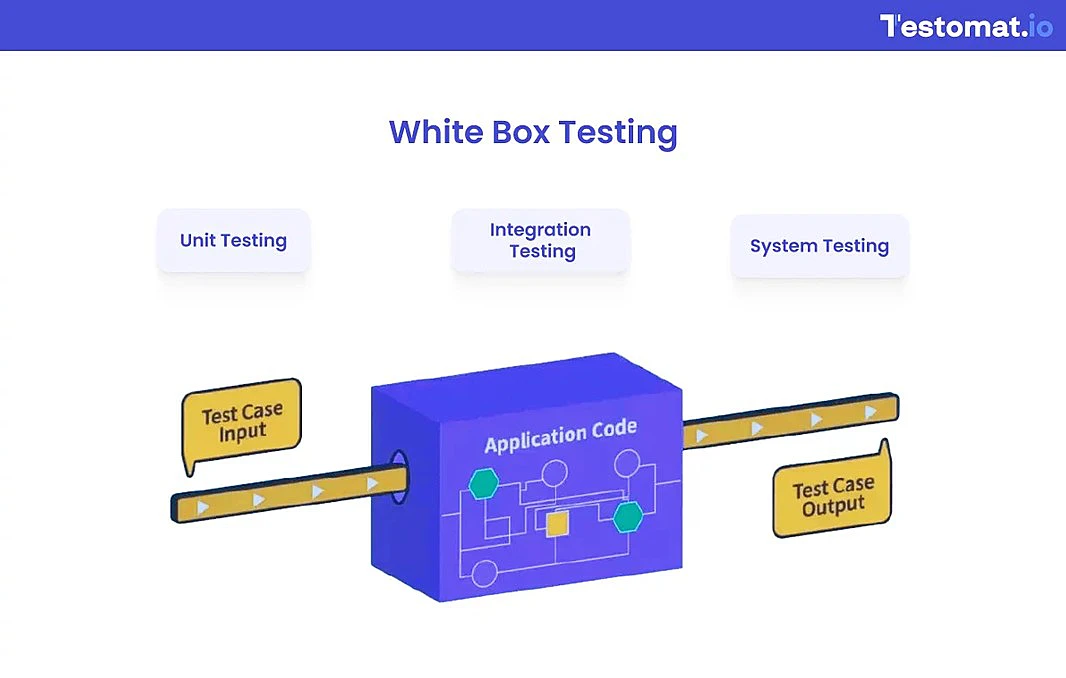
Essential White Box Testing Techniques for 2026
To implement effectivewhite box testing techniques at scale, you must move beyond basic statement coverage. Modern teams utilize a multi-layered approach:
1. Path Coverage
The gold standard for complex decision trees. By mapping every possible path through a piece of code, you ensure that even the most obscure edge cases are validated.
2. Data Flow Analysis
This technique tracks the lifecycle of variables. By monitoring where data is initialized, accessed, and modified, you can detect race conditions and memory corruption bugs that functional tests almost always miss.
3. Mutation Testing
This is the ultimate test of your test suite. You intentionally introduce small faults (mutants) into the source code. If your tests still pass, your test suite is inadequate. It forces your team to write better, more meaningful assertions.
(Insert your specific code snippets here: show a "before/after" of a logic block or a unit test that catches a edge-case scenario. QA leads love to see the actual implementation).
Top White Box Testing Tools & Stack
The industry is shifting toward unified observability. Here is the modern stack for 2026:
.jpg?x-image-process=image%2Fauto-orient%2C1%2Fresize%2Cm_lfit%2Cw_1920%2Fsharpen%2C100%2Fformat%2Cwebp%2Fmarker%2Cu_plus)
Why Unified Orchestration is the New Standard
The biggest bottleneck in structural testing isn't execution—it’s traceability. When code coverage data lives in a Jenkins log and your business requirements are sitting in a Jira board, the "why" behind your testing is lost.
Modern teams increasingly rely on ai test management tools to bridge this gap. A unified platform allows you to:
- Close the traceability loop: Map every line of code covered by white-box tests to specific business requirements.
- Reduce maintenance overhead: Use AI to predict which tests are impacted by specific code changes, preventing redundant runs.
- Stakeholder Transparency: Provide leadership with a "Quality Heatmap" that correlates code health with feature deployment status.
Integrating White Box Testing into CI/CD
Automation is mandatory. Your structural tests should act as automated gates in your pipeline:
- Pull Request Validation: Run unit tests on every PR. If branch coverage drops below your defined threshold (e.g., 85%), the build must fail.
- Impact Analysis: Use metadata to only run tests relevant to the changed modules.
- Continuous Reporting: Push all results to a centralized dashboard so the team isn't digging through terminal logs at 2:00 AM.
Conclusion: Engineering for Reliability
White-box testing is the backbone of reliable software. It separates hobbyist code from production-grade engineering. If you are still relying on scattered IDE reports and manual spreadsheet tracking, you aren't managing quality—you’re just hoping for it.
It is time to modernize your testing strategy. If you want to move from fragmented data to actionable insights, start by centralizing your testing ecosystem.
Ready to transform your QA process? Start your free trial with Testomat.io today.