As a solo growth marketer, I wear entirely too many hats on any given day. Managing budgets and analyzing spreadsheets is fine, but building the actual ad creatives used to drain my soul completely. I desperately needed a better way to generate assets without begging freelance designers for endless revisions.
For a long time, my media buying strategy was solid, but my creative pipeline was an absolute mess. I was spending more time resizing images for different platforms than actually optimizing my campaigns. Something in my daily workflow had to change before I burned out completely.
The Hidden Cost of "We Need New Ads by Friday"
Let’s be honest about the traditional creative production process. You write a detailed brief, send it out, and wait three days for a first rough draft. By the time you get the formatting right for TikTok, Instagram, and YouTube, a full week has easily passed.
This built-in delay actively kills campaign momentum. When a specific trend is popping off online, you cannot afford to wait a week. You need to launch, test, and iterate within 48 hours to capture the audience's attention.
Why the old pipeline is broken
The biggest issue with manual design is the inability to scale your ideas quickly. If I wanted to test five different background colors, somebody had to manually edit five different files. It was an incredibly tedious way to spend a Tuesday afternoon.
Ad fatigue happens faster now than it ever has in the past. An image that converts beautifully on Monday might be completely ignored by consumers by Friday. You have to feed the algorithmic beast constantly, which requires a massive volume of content.
The speed-to-market dilemma
I recently read a fascinating piece of research that perfectly captured my frustration. According to a 2023 HubSpot industry survey, 33% of marketers consider producing high-quality content consistently to be their absolute biggest hurdle. I definitely felt that exact pain point every single week.
I realized that my slow workflow was actively hurting my Return on Ad Spend (ROAS). Because I couldn't produce enough variations, I was leaving money on the table. My competitors were moving faster, and I had to find a technical solution to catch up.
Bringing Automation into the Creative Room
I started actively looking for ways to cut out the repetitive, mind-numbing tasks. At first, I tried using standard graphic design platforms that everyone knows. They had nice templates, but I still had to manually adjust every single layer for different aspect ratios.
That is when I realized I needed an AI Ad Generator to fix my broken system. I didn't just want a simple tool to make pretty pictures. I needed a platform that actually understood the anatomy of a high-converting digital advertisement.
Moving past basic templates
Most generic design tools rely on static templates that quickly look outdated to consumers. Audiences just scroll past them because they look like every other generic ad on their feed. I wanted a system that could generate fresh, engaging concepts from scratch.
My ultimate goal was to build a workflow where I could type in a concept and get launch-ready visuals. It sounded like science fiction just a few short years ago. Today, it is simply a standard requirement for efficient, profitable media buying.
Fixing the Leaks in My Production Funnel with Nextify.ai
After testing a dozen different platforms, I finally integrated Nextify.ai into my daily routine. The shift in my personal productivity was almost immediate and highly noticeable. It entirely removed the friction between having a marketing idea and seeing the final asset.
Instead of managing a messy Slack thread with external freelancers, I just open my browser. Nextify acts as my on-demand creative team that never sleeps or asks for deadline extensions. The interface is intuitive, meaning I didn't have to spend weeks learning complicated software.
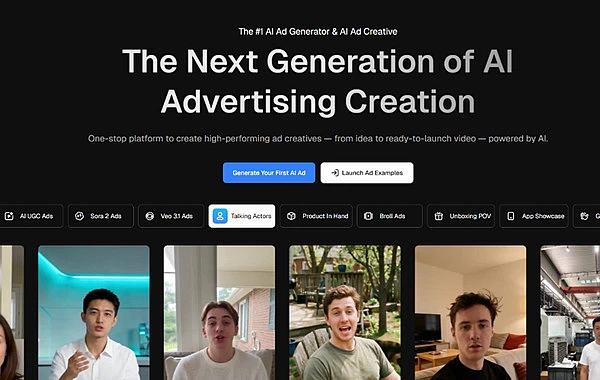
My new Monday morning routine
Before using this platform, my Mondays were consumed by drafting design briefs. Now, my Monday mornings look completely different. I review my weekend ad data, identify which concepts failed, and immediately open Nextify.ai.
I input my product details, set the tone I want, and let the engine do the heavy lifting. Within minutes, I have a folder full of fresh assets ready to upload to Facebook Ads Manager. What used to take three days now takes me roughly forty-five minutes.
From brief to variation in minutes
The most dramatic change in my workflow is how I handle A/B testing. Before, I would test maybe two image variations because that was all I had the time to make. Now, I use this ad generation AI to spin up ten different distinct angles instantly.
I can change the background setting, tweak the bold headline, and adjust the color palette with a click. If an ad starts experiencing fatigue, I simply do not panic anymore. I just log into the platform and generate a fresh batch to launch by the afternoon.
Keeping brand consistency without the hassle
One of my biggest initial fears about using AI ad tools was losing my brand’s unique identity. I assumed the outputs would look incredibly generic or visually disjointed from our website. Thankfully, my assumption was completely wrong.
Nextify allows me to keep everything perfectly aligned with our strict visual guidelines. The generated creatives actually look like they belong to our specific company. It takes the heavy lifting out of design without sacrificing my need for quality control.
What Happens When Workflow Meets AI
Rebuilding my workflow did more than just save me a few precious hours a week. It fundamentally changed how I approach my overall digital marketing strategy. I am no longer afraid to test wild, out-of-the-box ideas.
When creating an ad costs almost nothing in terms of time, you become fearless. I can test bizarre concepts just to see if the algorithm likes them. Sometimes, the weirdest AI-generated variations end up driving the cheapest clicks.
Scaling testing, not headcount
When you successfully remove the bottleneck of asset creation, your testing volume absolutely explodes. I can now run highly specific ads for tiny micro-segments of my target audience. If I want to target college students in one ad and busy moms in another, I just generate tailored visuals for both.
This is the true power of a reliable ai ad generator in a modern workflow. It gives a single solo marketer the creative output of an entire boutique agency. My monthly ad spend is finally going toward winning variations instead of mediocre guesses.