A practical guide to bids targeting measurement and the customer experience
A moving company can refine keywords and still lose money after the click. Unclear pricing, a failing form, or missed calls can waste suitable traffic. Profitable acquisition connects auction decisions with the customer experience.
Start with deliverable jobs, supported locations, and an affordable acquisition cost. Connect bids and search terms with website behavior, qualified inquiries, and sales outcomes.
How the Google Search auction determines a bid and a click price
Under Manual CPC, you set a maximum click bid, subject to applicable adjustments. Automated bidding sets bids using the chosen objective and controls. Actual CPC is the amount charged for a click, a separate figure from the bid.
Ad Rank determines eligibility and relative placement using the bid, auction-time quality, search context, competition, thresholds, and expected asset effects. Relevant copy and a useful page matter alongside budget. A higher bid does not guarantee a profitable customer.
Actual CPC is often below the maximum bid. It reflects the amount needed to clear relevant thresholds and compete for placement. No public calculator predicts the exact price of every future click.
Keyword Quality Score, from 1 to 10, diagnoses expected clickthrough rate, ad relevance, and landing-page experience. The displayed score itself is not an auction input. Use it to investigate problems; assess success through qualified demand and bookings.
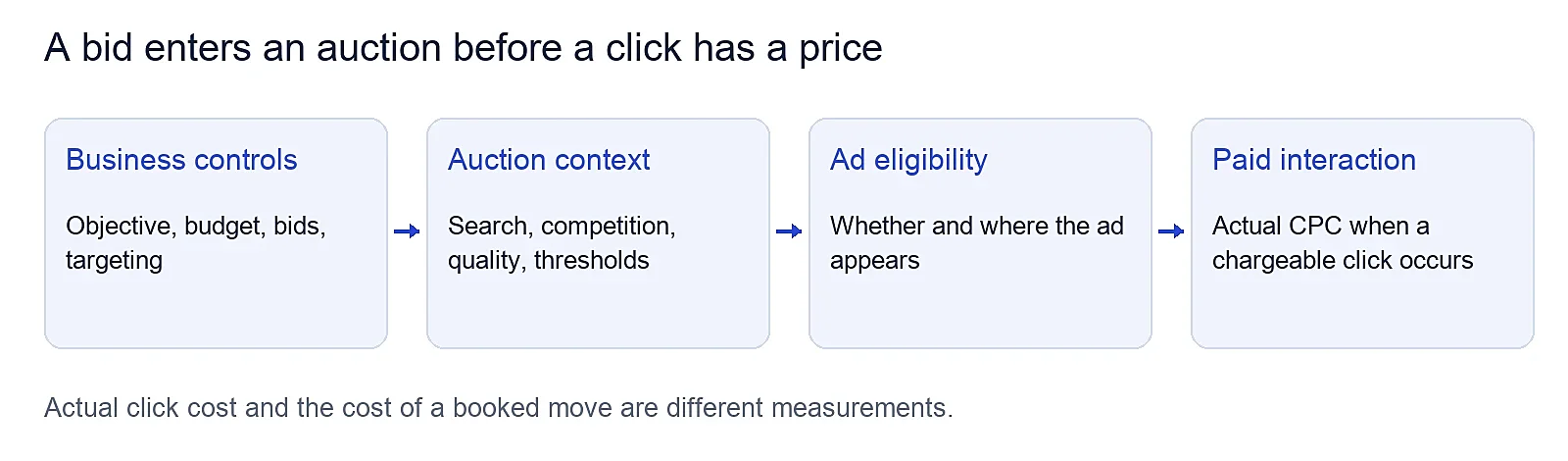
Figure 1. Conceptual Search auction flow. This illustration explains relationships and is not a formula or a screenshot of an advertising account.
Use Keyword Planner to estimate demand and costs before launch
Open Keyword Planner in Google Ads Tools. Account setup, including billing information, is required for basic keyword ideas. Use Discover new keywords for research or Get search volume and forecasts for an existing list.
Start with customer language such as local movers, apartment moving company, or office relocation. Set supported cities or service areas, language, network, and dates. National totals can conceal local conditions. Save these settings with every export.
Remove unsupported services and group useful themes. Check monthly searches, seasonality, advertiser competition, and top-of-page bid ranges. Advertising competition is not SEO difficulty. Treat small estimates carefully; overlapping keyword volumes are not separate audiences.
Save keywords with intended match types. Adjust forecast budgets and bidding assumptions; compare impressions, clicks, costs, and available conversion estimates. Export the dated plan. Forecasts change with demand and auctions and remain planning scenarios.
Historical top-of-page bid ranges approximate the 20th and 80th percentiles for the selected settings. They do not guarantee placement or future average CPC. Forecast impressions reflect campaign assumptions beyond historical search-volume statistics.
Translate a cost estimate into an affordable acquisition model
These hypothetical scenarios hold media spend at $3,000, click-to-inquiry conversion at 8%, and inquiry-to-booking conversion at 25%. They are planning examples, not Keyword Planner exports, Wengy results, or market benchmarks.
| Planning metric | Scenario A | Scenario B | Scenario C |
|---|---|---|---|
| Assumed average CPC | $8 | $12 | $20 |
| Media spend | $3,000 | $3,000 | $3,000 |
| Expected clicks | 375 | 250 | 150 |
| Expected inquiries at 8% | 30 | 20 | 12 |
| Expected bookings at 25% | 7.5 | 5 | 3 |
| Media spend per booking | $400 | $600 | $1,000 |
Clicks equal spend divided by CPC; inquiries equal clicks times the inquiry rate; bookings equal inquiries times the booking rate. Expected results can be fractional. Higher CPC needs stronger conversion, greater allowable acquisition cost, or another opportunity.
Work backward: a $400 media allowance per booking, 8% inquiry rate, and 25% booking rate imply an affordable average CPC of $8 ($400 × 0.08 × 0.25). Set that allowance after job contribution, other acquisition costs, overhead, and required profit. It is economic room, not a universal maximum bid.
Choose a bidding strategy that fits the outcome you can measure
A Search campaign using Target CPA normally pays for clicks while bids pursue an average conversion-cost objective. It does not buy every lead at a fixed price. Separate eligible Display pay-for-conversions features have their own rules and do not apply universally.
| Strategy | What it controls or seeks | Practical consideration |
|---|---|---|
| Manual CPC | You set maximum CPC bids. | Direct control requires active monitoring; clicks still need qualification. |
| Maximize clicks | Google seeks clicks within the budget. | Useful traffic measurement matters; more visits alone do not establish booked-job performance. |
| Target impression share | Automated bids pursue a chosen share and placement objective. | Visibility can be a separate goal; assess its cost against the business purpose. |
| Maximize conversions | Google seeks more selected conversions within the budget. | Reliable conversion definitions are essential; expect it to try to use the budget. |
| Target CPA | Google seeks conversions around an average CPA target. | Set a credible target and account for conversion delay and volume. |
| Maximize conversion value | Google seeks more reported conversion value within the budget. | Use meaningful, consistently assigned values. |
| Target ROAS | Google seeks conversion value around a return target. | Requires credible value data; revenue return differs from profit. |
Smart Bidding optimizes conversions or value using auction-time signals; other automation pursues clicks or visibility. From June 2026, some labels changed to Target CPA or Target ROAS where older interfaces described maximization with a target. Check settings and behavior, not labels alone.
Test goals before selecting a strategy. Sparse or delayed booking data needs a measurement plan, rather than relabeling page views as bookings. Assess conversion cycles and lead quality over a suitable period; repeated large changes obscure results. Enhanced CPC retired for Search and Display in March 2025.
Read Auction Insights as a competition report
Auction Insights compares advertisers in overlapping auctions. Open it for eligible Search campaigns, ad groups, or keywords over consistent dates. Reporting needs enough activity; missing data does not prove no competition.
| Metric | How to read it |
|---|---|
| Impression share | Impressions received divided by estimated eligible impressions. |
| Overlap rate | How often another advertiser appeared when your ad appeared. |
| Position above rate | How often the other advertiser ranked above you when both ads appeared. |
| Outranking share | How often you ranked above that advertiser or appeared when it did not. |
| Top of page rate | Share of received impressions shown among top ads. |
| Absolute top of page rate | Share of received impressions shown as the first top ad. |
A 40% overlap rate concerns impressions where your ad appeared, not all moving searches. A 60% position-above rate concerns occasions when both appeared. Different denominators prevent combining them into market share.
The report reveals no competitor bids, CPC, spend, or profit. Compare your own CPC trends, search terms, lead quality, and impression-share diagnostics. More competitor visibility alone does not justify raising every bid.
Build keyword groups around the moving job
A targeted keyword differs from the person's actual search term. Exact and phrase can match meaning-based variations; exact is not identical spelling. Broad reaches related searches and needs suitable bidding, measurement, and review. Query reporting may omit some searches.
| Search theme | Illustrative searches | Information the page should answer |
|---|---|---|
| Local residential | local movers Dallas; apartment movers Dallas | Coverage, move size, availability, packing, and estimate process. |
| Long distance | interstate moving company; movers Dallas to Denver | Supported origins and routes, service scope, and delivery expectations. |
| Commercial | office relocation company; business movers Dallas | Planning, timing, access, equipment, and operational disruption. |
| Additional services | packing and moving services; labor only movers | The exact service offered and any relevant limitations. |
These searches illustrate intent, not measured volume. Research the actual market, keep brand traffic identifiable, and align each theme with its ad, page, and qualification questions. Existing brand demand can conceal acquisition costs.
Negative keywords exclude unwanted searches. Employment, rental, equipment, and DIY terms are candidates only when irrelevant to the offer. Loading-help providers may want labor-only searches; indiscriminately excluding cheap, small, or apartment can remove viable work.
Negative broad blocks queries containing all specified terms in any order; negative phrase requires their order; negative exact blocks only that query without extra words. Negatives do not expand to all close variants: review plurals and synonyms separately. Google handles casing and misspellings. Check list application and conflicts.
Distinguish a person's location from the location they want to move to
Presence targets people in or regularly in an area. Presence or Interest also reaches people interested in it. Presence may fit local work; an out-of-state customer moving into your city may fit a separate inbound-relocation campaign. Distance alone does not establish lead quality.
Choose supported cities, areas, or radii using operating economics. Compare collected pickup and destination details with location reports and settings. Geographic signals do not establish addresses; Google describes targeting as best effort.
Review service, device, time, and geography together. Inquiries may be unprofitable after travel or crew costs. Align scheduling and backup response with staffing, then adjust budgets and targeting using classified outcomes.
Separate Business Profile visibility from paid local interactions
Business Profile supports discovery on Search and Maps. Its performance can include organic and advertising activity, so profile views should not be added to ad impressions or automatically called unpaid reach. Calls counts call-button clicks, not verified conversations. Website clicks and directions are distinct actions.
Eligible location assets support local formats including Maps. Google Ads local-action conversions can track actions during or after ad interaction, such as directions or call-button clicks. They differ from all organic profile activity; availability and bidding support vary by action and campaign.
Directions to a mover's office may have little relationship to a booking. Check commercial relevance before using an action for optimization. Keep Business Profile consistent with the real operation; a fictitious walk-in location is not a measurement solution.
Give every conversion event a precise meaning
| Event | What it establishes | What still needs checking |
|---|---|---|
| Ad impression | An ad was shown. | Suitability, interest, and every later stage. |
| Website click | A person clicked through. | Successful page load and genuine inquiry. |
| Phone-link or call-button click | The person tapped a call action. | Whether a call connected and matched the service. |
| Tracked call | A call met the configured measurement conditions. | Qualification and sales outcome; duration alone does not establish either. |
| Direction request | A navigation action was requested. | Commercial relevance; it is not a completed visit or booking. |
| Successful form or chat inquiry | A submission or relevant conversation was received. | Delivery, duplicate records, and qualification. |
| Qualified lead | The business accepted the inquiry against defined criteria. | Estimate, availability, and the customer's decision. |
| Booked or completed move | A defined sales milestone was recorded. | Cancellation, revenue timing, and job contribution. |
Google measures calls from ads, calls to displayed website numbers, and phone-link clicks differently. Supported forwarding numbers and reporting can measure calls; imported sales outcomes add qualification. Specify the method instead of grouping every phone action as calls.
Use diagnostic events to observe and selected business outcomes for bidding. Primary actions normally guide bidding when their standard goal is selected; secondary actions normally remain observational. Custom goals are an exception: included actions can guide bidding despite secondary labels.
Test submission, delivery, CRM record, event, and attribution. Avoid duplicate primary conversions from parallel imports. Choose lead-appropriate counting, stable identifiers, and consistent time zones; consider consent and reporting delay. Several interactions can represent one job.
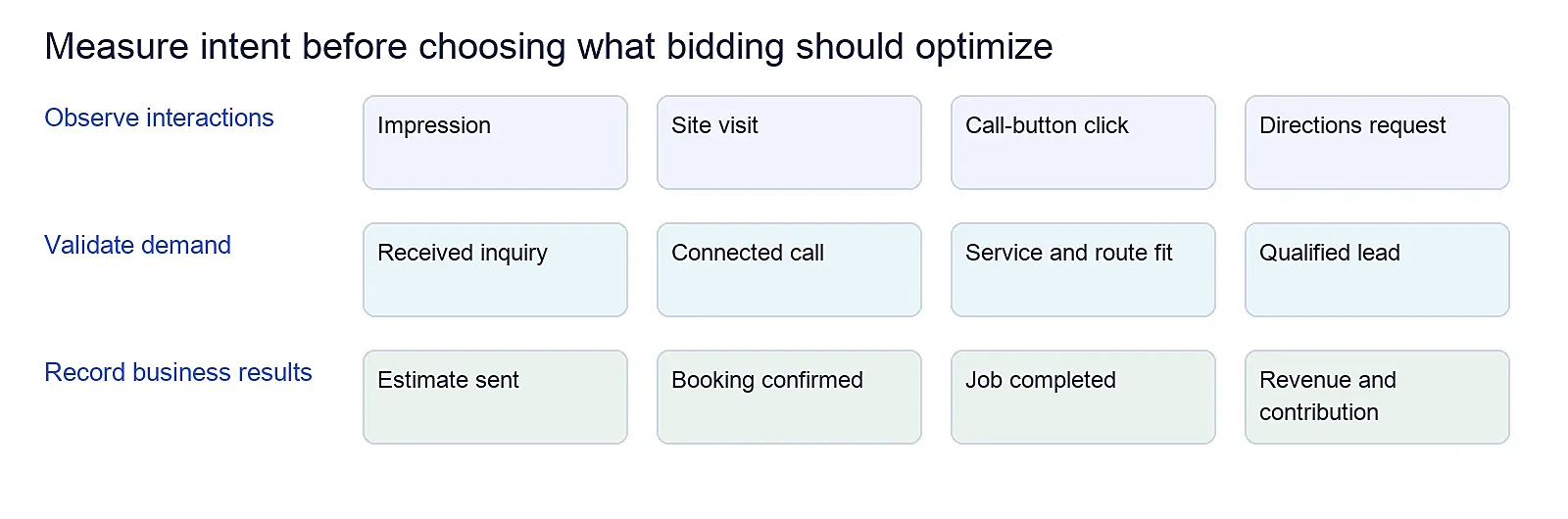
Figure 2. An example event hierarchy. Observation events and business outcomes must be defined and tested for the specific account.
Make the website convincing and usable
State the service, coverage, inclusions, estimate process, and next action clearly. Genuine reviews, relevant job examples, current team or vehicle photos, and accurate business identity help visitors assess whether the company can handle their move.
Explain hourly or fixed estimates and what determines the quote. Describe applicable minimum hours, travel, packing, stairs, and access costs. Publish supportable prices or ranges. Do not imply a final price before a necessary inventory assessment.
Keep initial forms proportional: contact, date, pickup, destination, and approximate size can start qualification; detailed inventory can follow. Confirm receipt and next steps. Provide another contact route, realistic chat availability, and a functioning offline handoff.
Test mobile loading, responsiveness, layout stability, and forms. Core Web Vitals goals include LCP within 2.5 seconds, INP below 200 milliseconds, and CLS below 0.1. Real-user measurements differ from lab diagnostics; good scores do not guarantee conversions.
Compress images, reserve dimensions, limit scripts, and prevent consent tools or chat from obstructing forms. Test slow connections, validation, confirmation, and phone links. Assess qualified inquiries rather than assuming a cosmetic redesign increases sales.
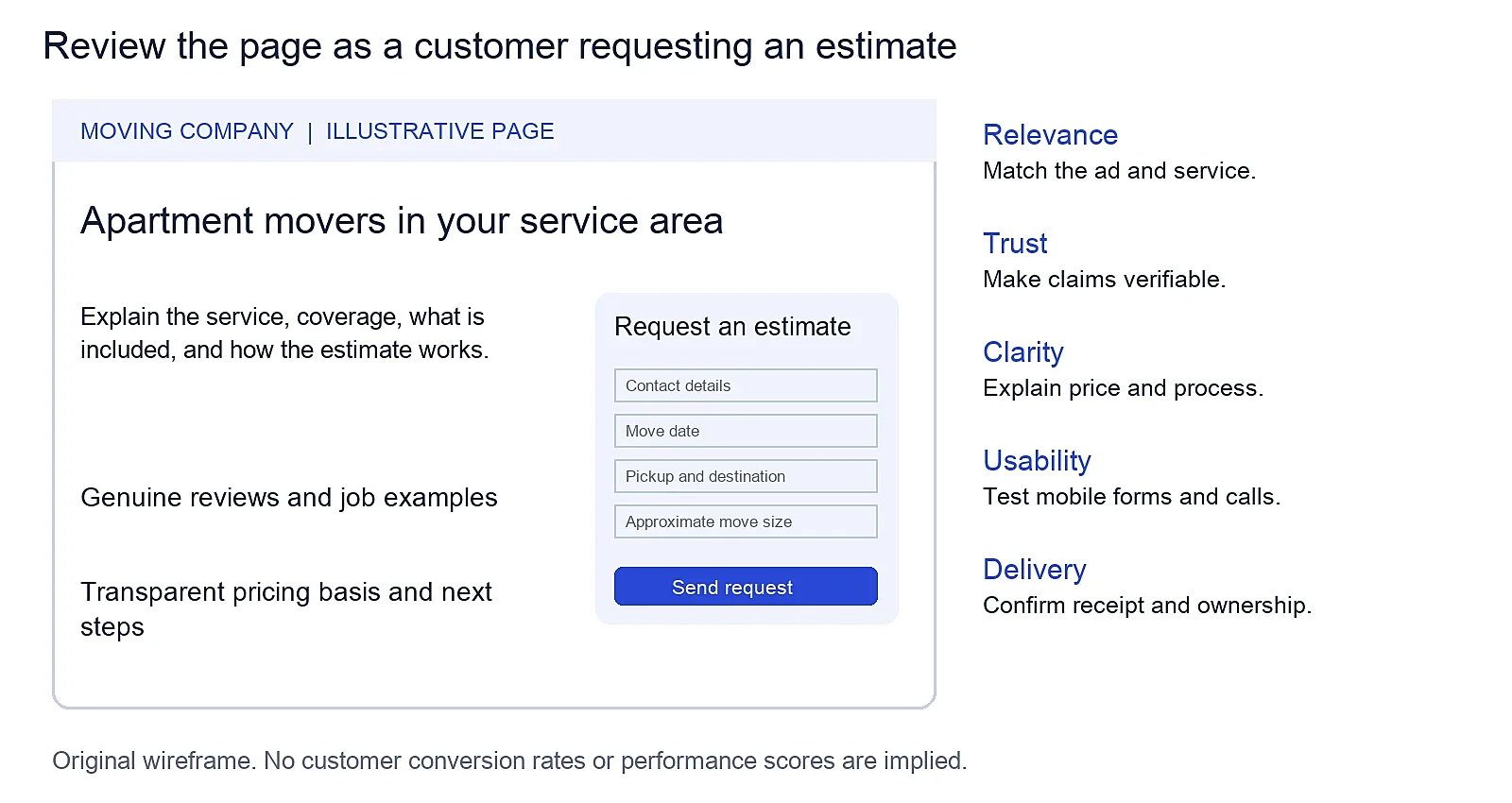
Figure 3. Illustrative website review areas. The wireframe is an original demonstration, not a real customer page or a performance test.
Carry the inquiry through the estimate and booking
Assign forms, calls, and chats to an owner with backup. Preserve service, route, date, source where available, and conversation context. A customer who described an office move in chat should not have to restart with sales.
Track new, contacted, qualified, estimate sent, booked, canceled, and lost statuses with reasons. Define first-response and estimate turnaround consistently. Investigate missing quotes and agree follow-up appropriate to customer preferences and applicable communication rules.
Return classified outcomes to marketing: unsupported routes differ from missed callbacks. Collect booking and completed-job values; Google's qualified and converted lead measurement can connect offline outcomes to ads. Review acquisition cohorts and conversion delay before comparing spend with sales.
Wengy describes its PPC work through targeting, landing pages, tracking, and sales feedback. Define who fixes forms, answers customers, and returns suitable-job outcomes to marketing.
Use business results to decide what to improve next
Wengy's published 904 Movers case reports July 2026 spend of $5,170, 13 clients, and $54,000 revenue, about 10.4x ROAS. It included Google Ads and Meta Ads; the results do not isolate Search bidding, a page, or chat software.
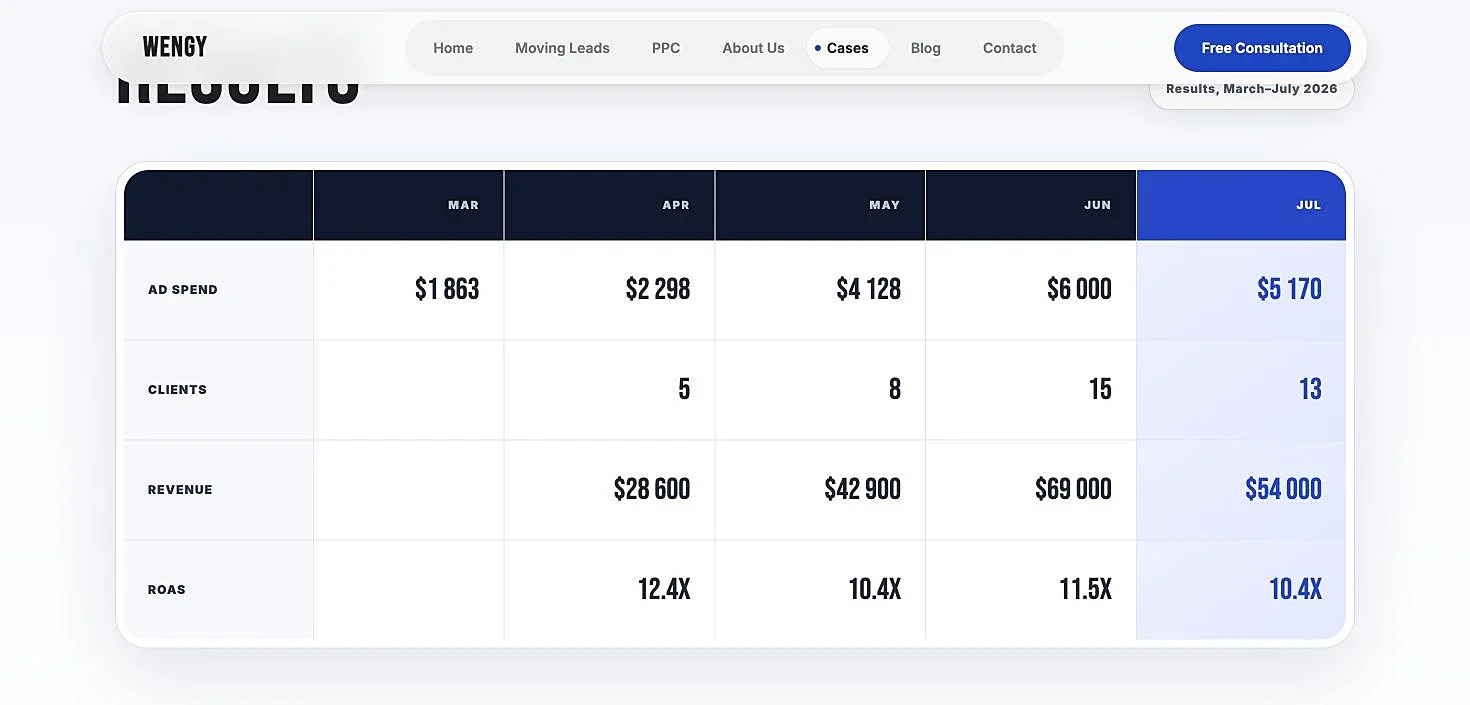
Figure 4. Screenshot of Wengy's published 904 Movers results. Blank March outcome cells are missing values, not zero results.
Diagnose the next constraint. Suitable impressions with few clicks call for relevance checks; clicks with few inquiries suggest tracking, offer, or usability issues. Qualified inquiries with few estimates need sales review. Low booking contribution requires examining costs and service economics.
Maintain SEO, Local SEO, and Business Profile alongside paid acquisition. Accurate pages, genuine reviews, useful information, and consistent contacts support discovery and confidence. Facebook and Instagram offer creative-led acquisition; eligible LSA offers a separate lead-based route. Keep channel reporting separate before combining totals.
The Google Ads for moving companies guide provides further context on services, location priorities, pages, and follow-up. Invest further when useful demand can be traced to work the business delivers profitably.
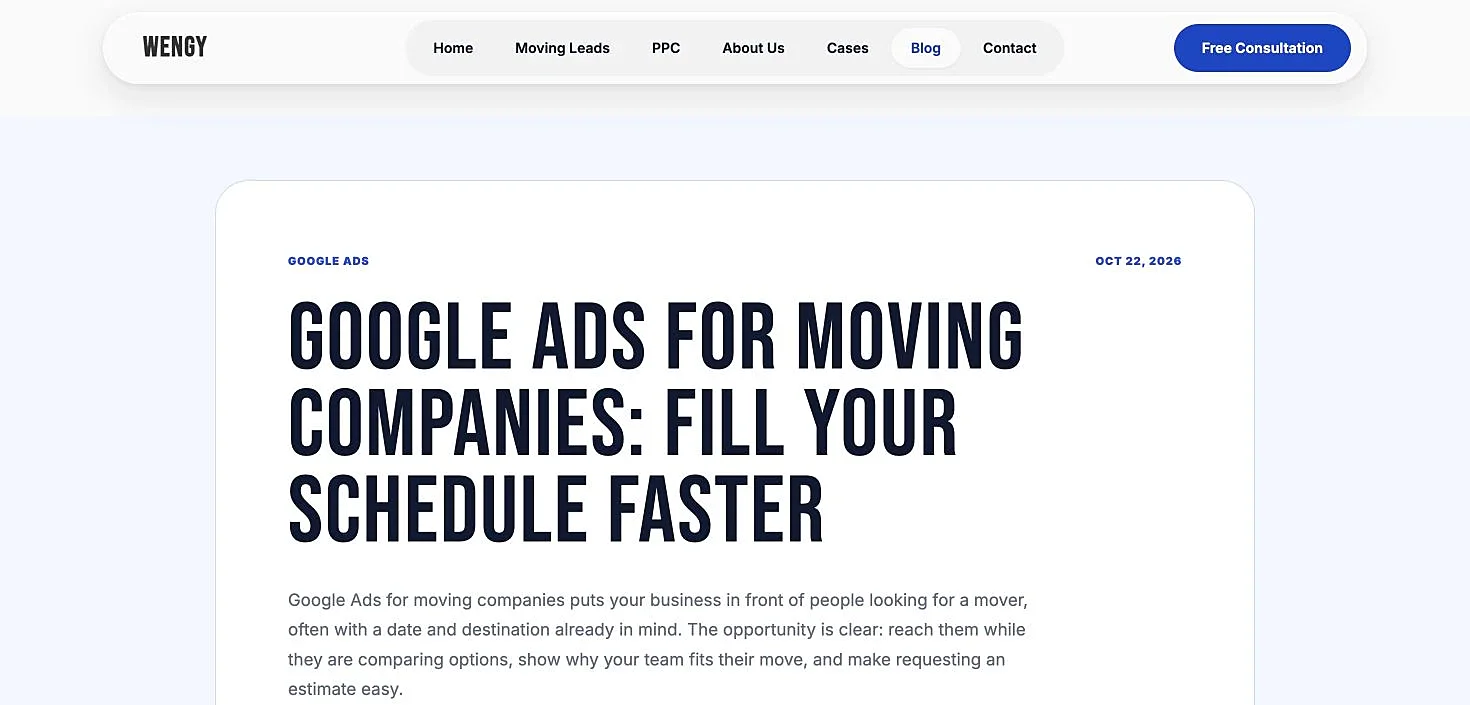
Figure 5. Wengy's public Google Ads guide. This is a website screenshot, not a Keyword Planner forecast or advertising-account report.