Enterprise AI chatbots are more than just experimental tools or side projects owned by innovation teams. In 2026, they are playing an important role in making the business process better.
In many industries, companies are under pressure to give fast customer service, support hybrid employees, make the internal process smooth, and increase the revenue without increasing too many team members
Enterprise chatbots help to fill that gap as they can decrease response times, automate repetitive work, centralize communication, etc which helps with better customer services as well as employee experiences.
This guide breaks down four essential types of enterprise chatbots every modern organization should look for along with practical examples of platforms leading in each category.
Why Enterprise AI Chatbots Matter More Than Ever?
Chatbots use natural language processing (NLP), machine learning, and deep connections with CRM, HRIS, and IT systems to automate complex business processes.
Early chatbots were simple and rule-based tools that followed scripted flows. Today these enterprise AI chatbots have become more advanced as they have the ability to respond based on the nature of the input given by the customer.
According to Gartner, conversational AI is expected to decrease contact center labor costs by $80 Billion in 2026 as automation becomes more advanced and widely adopted.
That shift shows that automation is no longer an option for enterprise-level processes. Companies are using AI chatbots for enterprises because of:
- 24/7 customer expectations
- Distributed and hybrid workforce communication challenges
- Growing HR and IT ticket volumes
- Increasing pressure to reduce operational costs
- The need for measurable productivity improvements
Below are four enterprise chatbot categories that are delivering tangible impact.
1. Omnichannel Customer Service Chatbots
What Is an Omnichannel Customer Service Chatbot?
An omnichannel customer service chatbot centralizes conversations across multiple channels such as website live chat, email, WhatsApp, social media, and messaging platforms bringing all into a single unified interface.
Instead of support agents juggling disconnected tools, enterprises can manage all interactions in one place. These AI-powered customer service chatbots handle routine queries automatically and route complex issues to the right human agent.
Key Business Problems It Solves
- Slow first response times
- Fragmented customer conversations
- Missed sales inquiries
- Overloaded support teams
- Inconsistent customer experience
As per IBM, AI-powered virtual agents can reduce service costs while improving responsiveness. For enterprises handling high interaction volumes, centralized automation directly impacts both efficiency and revenue.
Example: JivoChat
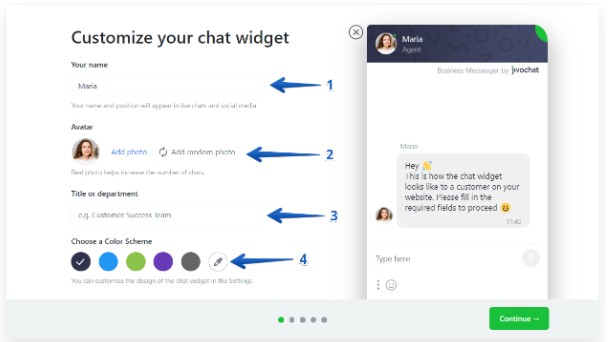
JivoChat is an omnichannel customer communication platform that combines live chat and messaging integrations into a single dashboard. It enables businesses to manage website visitors, social messages, and chat conversations without switching systems.
Key capabilities include:
- Real-time website visitor monitoring
- AI chatbot automation for frequently asked questions
- Seamless transition from bot to live agent
- Unified inbox across multiple channels
- Mobile and desktop access for distributed teams
For organizations focused on reducing response time and improving customer engagement, JivoChat offers a practical blend of automation and human interaction.
Best For
- Ecommerce businesses handling high support volumes
- SaaS companies generating inbound leads
- Enterprises operating across multiple communication channels
2. AI-Powered HR & Internal Communications Chatbots
What Is an HR Chatbot for Enterprises?
An HR chatbot is an internal AI assistant designed to automate employee support, HR self-service, onboarding, and internal communications.
Unlike customer-facing bots, HR chatbots focus on improving the employee experience. They provide instant answers to policy questions, automate benefits inquiries, deliver company announcements, and guide employees through onboarding and training processes.
For enterprises with large or distributed workforces, this type of internal communication chatbot becomes a critical productivity tool.
Key Business Problems It Solves
- Repetitive HR and policy-related questions
- Slow onboarding experiences
- Low visibility into company updates
- Time wasted searching for internal information
- HR teams overwhelmed with routine requests
As hybrid and remote work models continue to expand, employees expect the same instant access internally that they receive as customers. Enterprise HR chatbots provide that immediacy.
Example: HubEngage AI / HR Chatbot
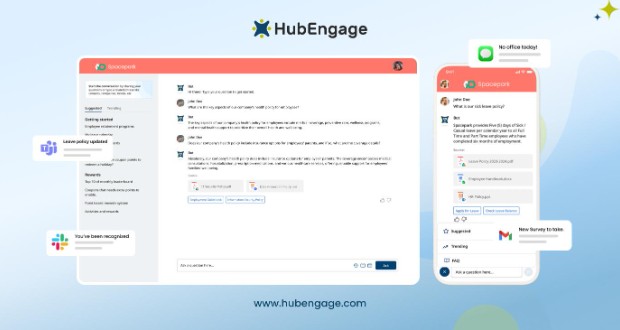
HubEngage offers an AI-powered employee communications platform that includes an advanced HR chatbot built specifically for enterprise environments. It is designed to give employees quick answers to HR questions, policy guidance, benefits information, and workplace resources decreasing HR workload while significantly improving employee access to support.
Unlike standalone chatbots, HubEngage combines communication, engagement, workforce development, and HR automation into a unified platform. This allows organizations to manage internal messaging, employee feedback, learning resources, and HR self-service in one seamless digital experience.
Key capabilities include:
- Instant answers to HR policies, benefits, and workplace-related questions
- Centralized access to company resources and documentation
- Automated internal communications and targeted updates
- Employee engagement tools such as surveys and feedback collection
- Support for onboarding, training, and workforce development initiatives
- Multi-channel access via mobile app, web, and email
By combining AI-powered HR support with enterprise internal communications, HubEngage enables organizations to create a seamless, high-impact employee experience while reducing administrative overhead.
Best For
- Organizations that want to combine communication, HR support, engagement, and workforce development into a single platform
- Enterprises focused on creating a seamless and high-impact employee experience
- HR and internal communications teams seeking to reduce workload while improving employee access to information
3. IT Service Desk & Helpdesk Chatbots
What Is an IT Helpdesk Chatbot?
An IT service desk chatbot is an enterprise AI chatbot designed to automate internal technical support tasks. It integrates with IT service management (ITSM) systems to resolve common issues such as password resets, access requests, and ticket routing.
These chatbots function as the first line of support, reducing manual workload while improving response speed.
Key Business Problems It Solves
- High volumes of repetitive IT tickets
- Password reset overload
- Delayed resolution times
- IT team burnout
- Limited after-hours technical support
In many enterprises, a significant portion of IT requests are routine and predictable. Automating those tasks allows IT teams to focus on higher-value strategic initiatives.
Example: Moveworks
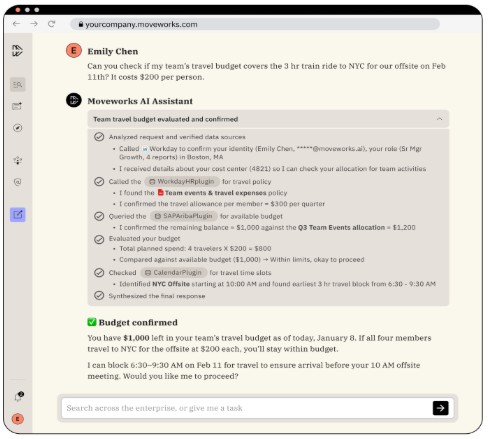
Moveworks is an AI-powered IT service automation platform built for enterprise environments. It uses advanced natural language understanding to interpret employee requests and automate resolutions directly within enterprise systems.
Key capabilities include:
- Automated ticket resolution and routing
- Integration with enterprise collaboration tools
- Intelligent escalation workflows
- AI-driven issue detection
IT helpdesk chatbots like Moveworks help reduce backlog while improving employee satisfaction with faster resolutions.
Best For
- Enterprises with complex IT infrastructures
- Global organizations requiring 24/7 support
- Companies looking to reduce IT operational costs
4. AI Sales & Lead Qualification Chatbots
What Is a Sales Chatbot?
A sales chatbot is a conversational AI tool designed to engage website visitors, qualify prospects, and route high-intent leads to sales representatives in real time.
These enterprise chatbots focus on revenue acceleration rather than support alone.
Key Business Problems It Solves
- Low website conversion rates
- Missed demo or consultation requests
- Unqualified sales meetings
- Lost after-hours inquiries
- Slow follow-up processes
Today’s buyers expect immediate engagement. Enterprises that delay responses often lose opportunities to faster competitors.
Example: Drift
Drift is a conversational marketing platform that leverages AI chatbots to automate lead qualification and schedule meetings. Sales chatbots like Drift enable revenue teams to increase pipeline velocity while reducing manual qualification work.
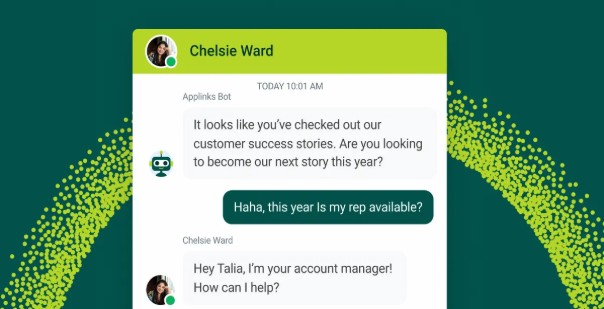
Key capabilities include:
- Automated qualification workflows
- CRM and marketing automation integrations
- Calendar booking functionality
- Personalized website conversations
Best For
- B2B SaaS organizations
- Enterprise sales teams
- Marketing departments focused on conversion optimization
How to choose the right Enterprise AI Chatbot?
Picking the right enterprise chatbot depends on what your business needs are and how they can be fulfilled. You can do so by following these simple steps :
- Identify the department with the highest gaps in the process.
- Define measurable KPIs such as response time reduction or ticket deflection rate.
- Check how easy it is to connect chatbot with CRM, HRIS, ITSM, and ERP systems.
- Assess AI maturity, including NLP accuracy and multilingual support.
- Confirm enterprise-grade security, compliance, and data governance standards.
A well-planned enterprise chatbot use helps in bringing together AI Automation with business strategies.
Enterprise Chatbot Trends In 2026
As Enterprise AI chatbots continue to get better, here are some trends that we can see this year:
- Generative AI-powered conversational responses
- Multilingual support for global operations
- Deeper CRM, HRIS, and ITSM integrations
- Predictive analytics and performance dashboards
- Increased focus on employee experience automation
As AI advances, enterprise chatbots are shifting from reactive support tools to proactive digital assistants embedded within daily workflows.