Music creation used to follow a fairly predictable formula. Someone wrote lyrics, another person worked out the melody, instruments were recorded, vocals were captured, and eventually everything was mixed into a finished track. Even a simple demo could require several people, multiple software tools, and plenty of time.
AI is quietly changing that workflow.
Today, a creator can describe an idea in a few sentences and turn it into a musical concept within minutes. A text prompt can suggest a genre, mood, tempo, instrumentation, vocal style, or even a complete song structure. Give an AI system a set of lyrics, and it may be able to transform those words into a song with melody, rhythm, harmonies, and vocals.
This shift is making AI music generation interesting far beyond professional recording studios. Independent musicians, YouTube creators, TikTok users, game developers, advertisers, podcasters, and casual music fans are all experimenting with AI music tools to turn ideas into listenable tracks.
The technology is still evolving, but one thing is already clear: creating music is becoming much more accessible.
From Text Prompts to Musical Ideas
One of the biggest changes brought by generative AI is the ability to use natural language as a creative starting point.
Instead of opening a digital audio workstation and immediately thinking about chord progressions or drum patterns, creators can begin with something much simpler:
"Create a dreamy indie-pop song about driving alone through a city at midnight."
From there, an AI music system can interpret the description and translate it into musical characteristics. The result may include soft synths, atmospheric guitars, a steady beat, and vocals that match the emotional direction of the prompt.
This approach is commonly known as text-to-music.
The interesting part is that the prompt does not necessarily need to sound technical. Creators do not have to know the difference between a minor seventh chord and a distorted bass patch just to communicate an idea. They can describe the feeling they want in ordinary language.
For beginners, that removes one of the biggest barriers to music creation: knowing how to operate complicated production software.
For experienced musicians, it can work differently. AI can become an idea-generation partner rather than a replacement for the creative process.
What Can AI Music Generation Actually Create?
Modern AI music tools can assist with several parts of the songwriting process.
Melodies and Harmonies
A melody is often the part of a song that listeners remember first. AI systems can generate melodic ideas based on a selected style, mood, or lyrical theme.
The same concept can also apply to harmony. A creator may start with a simple vocal idea and use AI to explore different harmonic directions without manually testing dozens of chord combinations.
This can be especially useful during the early stages of songwriting, when experimentation matters more than perfection.
Beats and Instrumentation
Rhythm is another area where AI can speed things up.
A creator might request an energetic electronic beat, a relaxed lo-fi groove, a trap-inspired rhythm, or a cinematic percussion arrangement. The system can then build an instrumental foundation around that direction.
Instrumentation can also be adjusted according to the desired atmosphere. Acoustic guitar, piano, strings, synthesizers, bass, drums, and electronic textures can all play different roles in shaping the final sound.
Vocals and Song Structure
AI-generated music is no longer limited to instrumental loops.
Many platforms can create complete vocal performances and organize songs into recognizable structures such as verses, choruses, bridges, and outros.
That makes the technology particularly interesting for people who have plenty of lyrical ideas but do not necessarily have access to a vocalist or recording studio.
Of course, generated vocals still have limitations. Pronunciation, emotional expression, phrasing, and consistency can vary depending on the tool and the input. But the ability to produce a rough vocal performance from text alone is already changing how creators experiment with songs.
AI Song Creation for Everyday Creators
One of the most important developments in AI music is that songwriting is no longer limited to people who already identify themselves as musicians.
A travel creator might need a background song for a short video. A YouTuber might want an original intro. A game developer could need a mysterious soundtrack for a new level. Someone making a birthday video might simply want a funny personalized song.
Traditionally, all of these projects could involve finding music, licensing it, hiring someone, or learning music production.
AI music tools provide another option.
A user can start with a concept, choose a direction, experiment with several versions, and select the result that best fits the project.
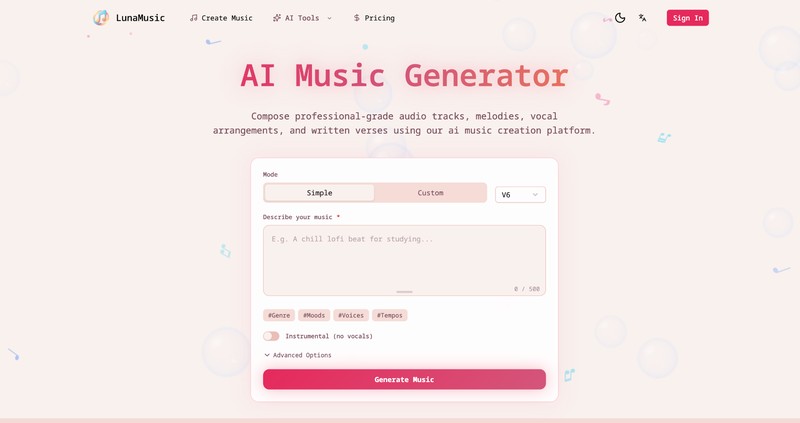
This is where an AI Song Generator can become useful. Instead of treating songwriting as a highly technical process, the creator can approach it more like a conversation with a creative tool: describe the theme, specify the mood and style, and explore what comes back.
The appeal is not simply speed. It is the ability to experiment without making every experiment expensive.
A songwriter who normally spends an hour developing one arrangement can potentially explore several different musical directions in the same amount of time. Some ideas will be unusable, while others may reveal a surprisingly good hook or arrangement.
And occasionally, the AI may produce something that makes the creator think, "Wait... that's actually pretty good."
Lyrics-to-Song: Giving Words a Musical Identity
Lyrics-to-song generation is another fascinating area.
Writing lyrics and composing music are traditionally separate tasks. A songwriter might spend days polishing words before figuring out how those words should actually sound when sung.
AI can connect those two stages.
Creators can provide lyrics and ask an AI system to interpret them through a particular genre or mood. The system may then generate a melody and arrangement that fit the words.
Imagine a set of lyrics about nostalgia. The same lyrics could become a soft acoustic ballad, a cinematic pop track, a retro synth song, or an emotional piano piece depending on the musical direction.
The words stay the same, but the emotional experience changes dramatically.
This makes AI particularly useful for experimentation. Rather than asking, "Is this the right melody?" a creator can explore several possibilities and compare them.
The Growing Role of AI Rap Generation
Rap presents a slightly different challenge from conventional singing.
Flow, rhythm, rhyme placement, syllable density, cadence, and beat selection all interact with one another. A line that looks great on paper can sound awkward when delivered over a beat.
AI rap generation attempts to bring these elements together.
Instead of creating a generic instrumental and then trying to squeeze lyrics into it, creators can explore rap-oriented generation workflows designed around rhythm and vocal delivery.
For example, a creator might describe a track as an aggressive underground rap song with a dark bassline, fast flow, and punchy drums. Another might want something closer to melodic hip-hop with a relaxed delivery and atmospheric production.
The creative possibilities can change significantly depending on the prompt.
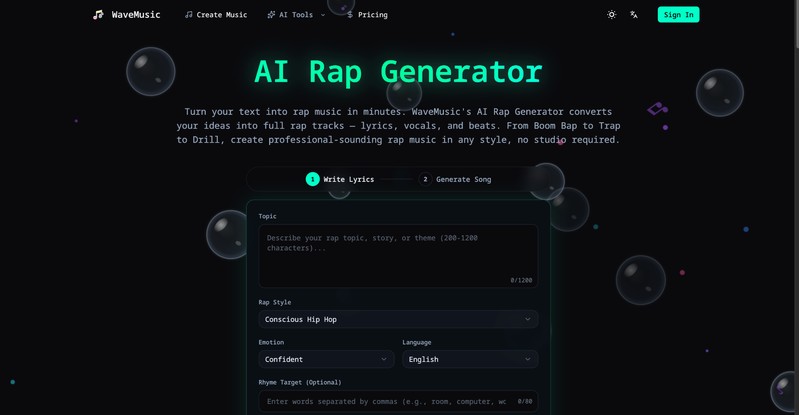
An AI Rap Generator can help turn rap concepts into complete musical experiments, allowing users to explore beats, flows, lyrical themes, and different hip-hop-inspired directions without building every component manually.
This can be particularly useful for creators who enjoy writing but do not have the production skills to build a full rap track from scratch.
AI Music for YouTube and TikTok Creators
Short-form video has created an enormous demand for music.
A 20-second clip may need an energetic beat. A comedy video might need something deliberately dramatic. A travel montage could benefit from an uplifting soundtrack. A fashion video may call for something stylish and rhythmic.
The problem is that creators cannot simply use any song they find online.
Copyright and licensing considerations make original or properly licensed music increasingly important for content creators.
AI-generated music can provide another source of original material. Instead of searching through endless music libraries, creators can develop tracks around the specific mood and pacing of their videos.
This also opens the door to more personalized content.
A creator could potentially produce different versions of a song for different videos rather than repeatedly using the same background track.
AI Music in Games, Advertising, and Podcasts
The use cases extend well beyond social media.
Video Games
Game developers often need music that changes with the player's environment. One scene may require tension, while another needs something calm and exploratory.
AI music generation can help developers prototype different musical directions quickly.
Rather than waiting until the final production stage to experiment with a soundtrack, developers can use generated music during early development to understand how a scene might feel with different audio.
Advertising
Advertising also benefits from highly specific music.
A luxury product commercial might require elegant ambient music. A sports advertisement could call for something energetic and aggressive. A children's campaign may need bright, playful sounds.
AI allows creative teams to explore these directions rapidly and create music around the tone of a specific campaign.
Podcasts
Podcasters can use AI music for intros, outros, transitions, and background atmosphere.
For independent podcasters in particular, the ability to generate music without assembling a full production team can make the process much simpler.
AI Music Tools Are Becoming Creative Partners
It is tempting to think of AI music generation as a button that simply produces finished songs.
In practice, the more interesting use case may be collaboration.
A creator provides the idea. AI provides variations. The creator listens, rejects some options, adjusts the prompt, changes the genre, rewrites the lyrics, and tries again.
This creates a feedback loop.
The first generation may not be great. The second might have a better chorus. The third may have the right rhythm but the wrong vocal tone. After several iterations, the creator may arrive at something worth developing further.
That process is not particularly different from traditional songwriting experimentation. The difference is that AI can dramatically reduce the amount of manual work required for each experiment.
What AI Music Still Cannot Perfectly Replace
Despite the progress, AI music generation is not magic.
Generated songs can sometimes contain awkward lyrical phrasing, repetitive structures, unnatural vocals, or arrangements that sound technically polished but emotionally flat.
Human judgment still matters.
A good song is not simply a collection of correct notes and pleasant sounds. Context, storytelling, cultural references, personal experience, performance, and emotional intention all influence how music connects with listeners.
That is why many creators may find AI most useful as a creative assistant.
It can generate possibilities, but the creator still decides which possibilities are worth keeping.
A New Entry Point Into Music Creation
Perhaps the biggest impact of AI music technology is not that it makes professional music production obsolete. Instead, it lowers the barrier to getting started.
Someone with no formal musical training can now experiment with songwriting.
A lyricist can hear their words performed.
A video creator can develop a custom soundtrack.
A rapper can test different flows and production styles.
A game developer can prototype atmospheric music.
And a curious music fan can simply type an idea into a prompt and see what happens.
That accessibility could ultimately be more important than any individual AI music feature.
Music has always evolved alongside technology. The piano changed composition. Recording technology changed performance. Digital audio changed production. Streaming changed distribution.
AI is becoming another layer in that long history.
The Future of AI Song Creation
The next stage of AI music generation will likely focus on greater control.
Creators will want to adjust individual sections of a song without regenerating everything. They will want more consistent vocal identities, stronger control over instrumentation, better lyric alignment, and more precise editing.
We may also see AI music tools become increasingly integrated with video editing, social media production, game development, and other creative software.
The boundary between songwriting, production, and content creation is already becoming less rigid.
For now, AI music generation is best viewed as a rapidly developing creative toolkit. It can transform text into musical ideas, turn lyrics into songs, experiment with rap flows, generate instrumental arrangements, and help creators move from a blank page to something they can actually hear.
The most exciting part may not be that AI can make music without traditional production skills.
It is that more people now have a way to turn the music they imagine into something they can listen to.