The era of silent scrolling is dead. Open TikTok, Instagram Reels, or YouTube Shorts, and what hits you first? It isn't just the visual hook; it’s the audio. Sound is the emotional glue of the internet. But for creators, finding the right track has always been a nightmare of copyright strikes and expensive licensing fees. This is where the AI music generator steps onto the stage.
We aren't just talking about robotic beeps and boops anymore. We are witnessing a seismic shift in how commercial audio is produced. AI tools are democratizing music creation, turning video editors into composers in seconds.
In this deep dive, we explore the top players in the game. We will analyze how they are fueling the "creator economy" and helping brands stand out in a crowded digital marketplace.
Let’s drop the needle.
1. MusicArt: Painting with Sound
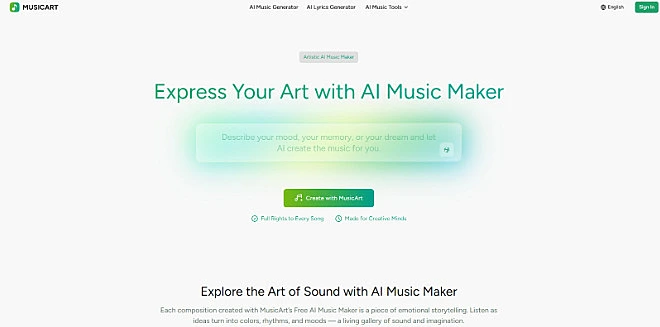
The Vibe
Think of this tool as your digital canvas. MusicArt positions itself at the intersection of visual inspiration and audio output. It’s not just about typing text; it’s about capturing a mood. For creators who think in colors rather than chords, this is an intriguing entry point.
The Secret Sauce
- Visual-to-Audio Translation: The core appeal here is the interface. It aims to simplify the AI music generator experience by focusing on atmosphere.
- Genre Blending: It excels at merging contrasting styles. Want Lo-Fi hip-hop mixed with orchestral swells? This engine attempts to bridge that gap.
- Ideal User: Video essayists and art vloggers who need background ambiance that doesn’t distract from the narration.
It’s artistic, but is it a chart-topper? Perhaps not. However, for setting a scene, it does the heavy lifting.
2. OpenMusic AI: The Open Source Spirit
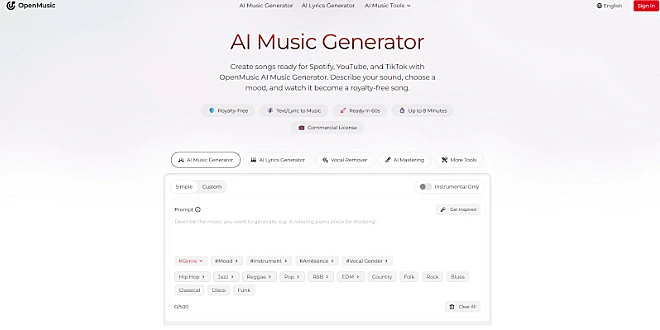
The Mission
The name suggests accessibility, and that is exactly the goal. OpenMusic AI feels like a tool built for the community. It strips away the intimidating dashboard of a professional DAW (Digital Audio Workstation). It focuses on the raw potential of generative audio without the gatekeeping.
Why It Matters
- Prompt Flexibility: It handles abstract prompts surprisingly well. You don’t need to know music theory terminology to get a decent result.
- Rapid Iteration: You can regenerate tracks quickly. This is crucial when you are trying to match the pacing of a fast-cut 15-second video.
- Licensing Ease: It targets users who are terrified of DMCA takedowns.
The sound quality can sometimes feel a bit "compressed." It lacks the high-fidelity punch of a studio recording, but for social media compression, it works.
3. Freemusic AI: The Budget Saver
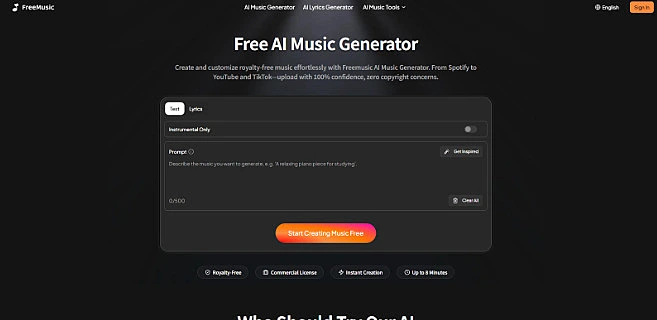
The Value Proposition
Let’s be honest. Most content creators are balling on a budget. Freemusic AI tackles the biggest barrier to entry: cost. While many platforms hide their best features behind steep paywalls, this AI music generator aims to keep the barrier low.
What You Get
- Royalty-Free Focus: The primary selling point is safety. You generate it; you use it. No hidden fees.
- Simple Categories: It doesn’t overwhelm you. You pick a mood, a duration, and you go.
- Commercial Use: It positions itself as a safe harbor for small businesses needing background tracks for ads.
You get what you pay for. The instrumentation can sound a bit synthetic compared to premium rivals. It’s perfect for background noise, but maybe not for a cinematic masterpiece.
4. MusicCreator AI: The Director’s Choice
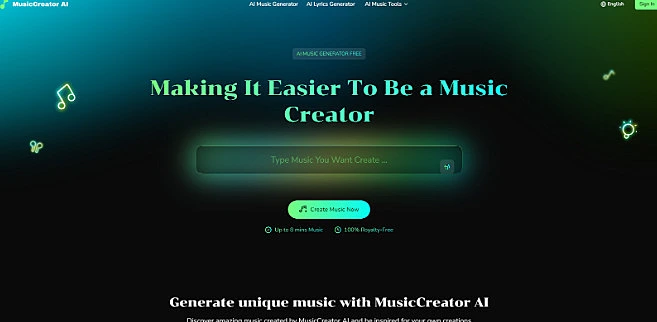
The Setup
This tool feels like it was built with the video timeline in mind. MusicCreator AI understands that music in video isn't static. It needs to rise, fall, and transition. It attempts to give the user more control over the structure of the song, rather than just generating a random loop.
The Toolkit
- Structure Control: unlike basic tools, it allows for better definition of intro, verse, and chorus sections.
- Instrumentation Swapping: Don’t like the drums? Some versions of this tech allow you to reroll specific elements without losing the melody.
- Keyword Optimization: It processes complex prompts effectively, acting as a smart AI music generator for specific niches like "tech reviews" or "fitness montages."
It offers a balance between automation and control. It’s for the creator who wants to play producer without learning Ableton.
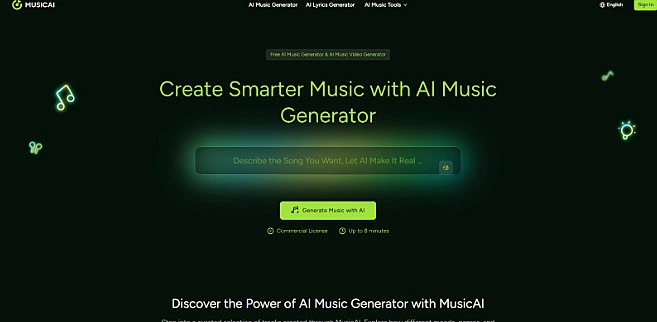
5. MusicAI: The Generalist
The Scope
MusicAI tries to be the Swiss Army Knife of generative audio. It doesn’t specialize in just one genre. It casts a wide net, attempting to cover everything from EDM to acoustic folk.
Key Capabilities
- Speed: It generates tracks incredibly fast. If you have five minutes to finish an edit, this speed is a lifesaver.
- Volume: It can churn out multiple variations of a single prompt instantly. This gives you options.
- User Interface: Clean, minimal, and intuitive.
Because it tries to do everything, it sometimes lacks depth in complex genres like Jazz or Classical. It’s a jack of all trades, master of pop.
6. Brev.ai: The Short-Form King
Need for Speed
The name "Brev" hints at brevity. Brev.ai is unapologetically designed for the TikTok and Shorts generation. It understands that you don't need a 4-minute ballad. You need 30 seconds of heat.
The Edge
- Text-to-Music Precision: You type "upbeat funky bass for travel vlog," and it delivers exactly that.
- Suno V3.5 Integration: Many users flock here because it leverages advanced models to create vocals that actually sound human.
- Viral Potential: The song structures are punchy. They get to the hook immediately, which increases viewer retention rates.
If your content strategy relies on trends and high energy, Brev.ai is a top-tier AI music generator. It cuts the fluff.
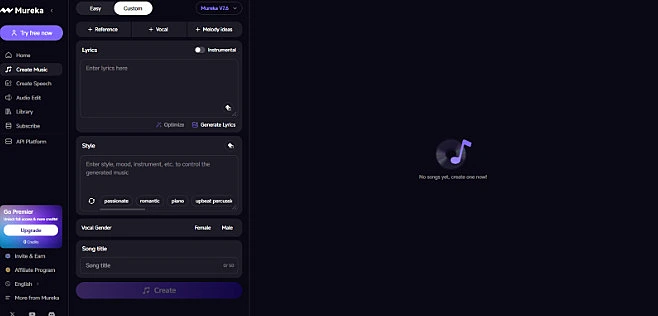
7. Mureka.ai: The Commercial Powerhouse
The Professional Angle
Mureka.ai is stepping up the game for commercial creators.
It isn't just about making noise; it’s about making sellable content. This platform is bridging the gap between AI hobbyists and professional media producers.
What Stands Out
- High Fidelity: The audio quality here is often superior to the free alternatives. It sounds less "MIDI" and more "Studio."
- Style Transfer: It excels at understanding nuance in style prompts.
- Community Vibe: It allows users to publish and share, creating a marketplace feel.
For brands creating Instagram ads, Mureka offers a level of polish that builds trust. Bad audio ruins good video; Mureka ensures the audio matches the visual quality.
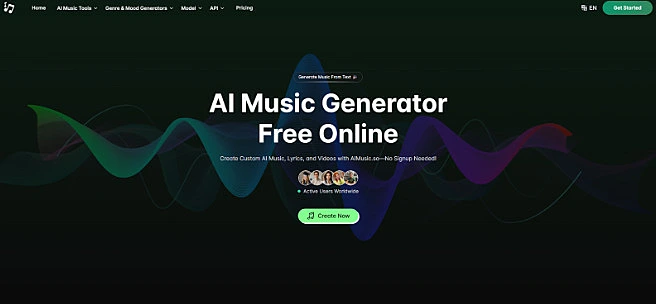
8. AImusic.so: The User Experience
The Interface
AImusic.so focuses heavily on the user journey. It removes the technical jargon. There are no knobs for "LFO" or "Compression." There are just simple commands and results.
Sound Quality & Use
- Lyric Generation: It handles vocal generation surprisingly well, allowing creators to add custom lyrics to their jingles.
- Diverse Library: It draws from a vast dataset to ensure your track doesn't sound like everyone else's.
- Smart Layout: It’s designed for mobile-first creators who might be editing on a phone or tablet.
It’s accessible, fun, and surprisingly powerful. A great entry point for those intimidated by music production.
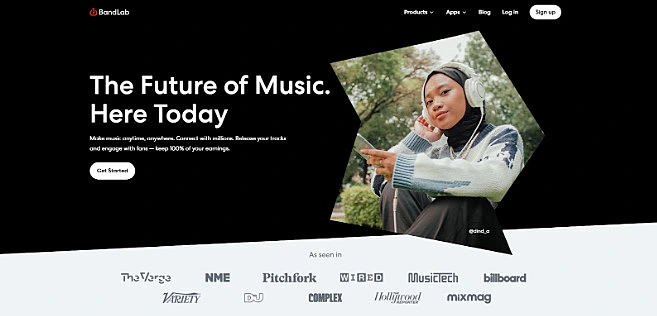
9. BandLab: The Collaborative Giant
The Community Studio
BandLab is not just an AI music generator; it is a cultural phenomenon. It is a full-blown DAW in the cloud with a massive social network attached. However, their "SongStarter" feature is the AI magic we are interested in.
SongStarter Magic
- Idea Generation: You shake your phone (literally) or roll the dice, and it spits out a unique progression.
- Full Customization: Unlike other tools, you can take the AI idea and immediately edit every single note in the studio editor.
- Royalty-Free Ecosystem: BandLab allows creators to own their creations, which is massive for monetization.
It bridges the gap between AI generation and human refinement. You start with AI, but you finish with human soul.
The Big Picture: AI and the Future of Music
Driving Commercialization
The tools listed above are not just toys. They are engines of commerce. Short video platforms have shortened our attention spans. Creators have milliseconds to grab attention. An AI music generator allows for "Hyper-Personalization." Brands can now create unique sonic branding for every single campaign without bankrupting their marketing budget.
Impact on the Industry
Is AI killing the musician? No. It is evolving the role.
- Lower Barrier to Entry: You no longer need a $5,000 studio to make a hit.
- Speed to Market: Trends on TikTok last 48 hours. AI allows music production to move at the speed of culture.
- New Revenue Streams: Musicians are now training AI models, licensing their styles, and finding new ways to monetize their data.