All the time you have put into developing your knowledge has been worthwhile. The opinions you express are valuable. When you write and share content that sounds like bot-generated content, your reputation is gone immediately.
Thought leaders have their own unique problems that none of the AI humanizer reviews address at all. You aren't writing blogs or school papers. You are creating perspectives that demonstrate your knowledge and expertise, making you appear as a credible expert. Your voice must convey experience, confidence, and most importantly, humanity. It can take only seconds for a generic bot-created content to destroy the image of being an expert.
I have spoken with many executive-level people, consultants, and business owners, and they all tell me the same thing. They use AI to create content faster, but they require tools that will keep the depth and personality that made them credible in the first place. They need a humanizer that was designed for authority, not just to increase bypass rates.
Why Robotic Content Kills Your Authority
People will notice if your LinkedIn articles look like every other article created by AI. People may or may not realize that AI created your article. However, most of the time, people will feel that something is wrong. The formulaic writing style. The obvious transitions between ideas. The business buzzwords that sound good to say, but do not add any value.
Your lack of originality in creating an article can cost you future potential clients. People will simply scroll through your article on LinkedIn instead of reading it. The media will ignore all of your pitches. Other speakers at conferences will be selected before you. Your article may get published; however, it will not have as much of an impact. Attention is not being converted to influence.
Thought leaders, particularly those who create their own content for their businesses, should be concerned about sounding generic with their articles. Content is essentially the product that is sold in many businesses. As such, having your articles sound unoriginal is basically a career-ending move.
How I Tested These Tools
I used the same material as the executive level on all platforms. The test piece was an article of 1,200 words about strategic decision-making. This is professional writing. It is neither informal nor academic; it is written to be read by senior executives.
The three things I assessed were whether the humanized version retained the original sophistication of the ideas presented, whether it would pass Originality.ai, GPT Zero, and Turnitin without triggering flags, and whether it preserved the subtle characteristics of executive communication—confidence, word choice, and rhythm of authority.
All of the tools failed at least one of the three assessments. Some tools triggered no alarms but sounded like they were written by children. Other tools retained the tone of the original but triggered immediate detection. A few were able to trigger no alarms and retain the tone of the original, but lost what made the voice unique.
The 8 Best AI Humanizers for Thought Leadership
Here's what actually works when you need content that sounds like it came from a seasoned professional, not a language model.
1. Walter Writes AI—Best Overall for Executive Voice Preservation
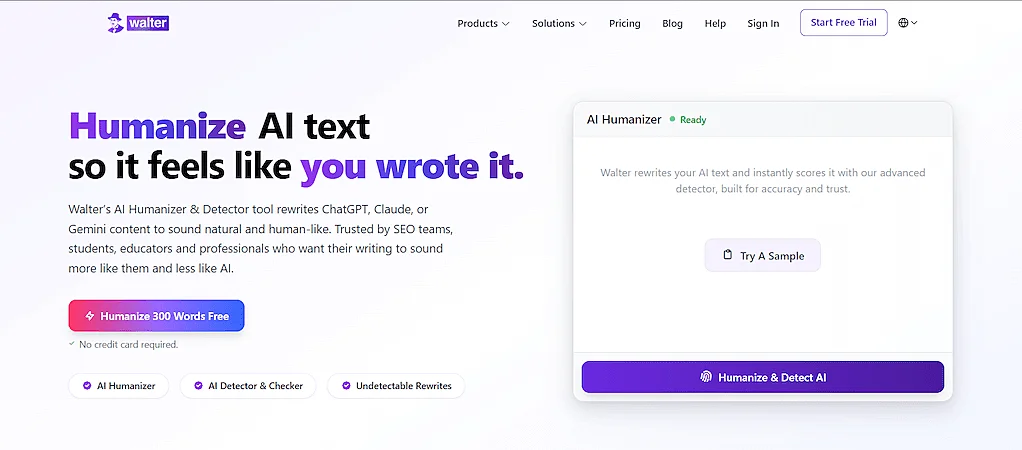 Beas AI humanizers for thought leadership - Walter Writes AI
Why do people talk so much about Walter Writes? For one simple reason—it does not simply rewrite your content to avoid detection by detectors. Instead, it structures the content to be written as if by a human expert from start to finish.
Walter Writes utilizes their own term, "Syntactic and Semantic Morphing," which means they create unpredictability in the structure of your content. They intentionally vary the length of sentences, introduce stylistic idiosyncrasies common to human writing, and above all, utilize a Professional mode that is built specifically for thought leaders.
What separates this product from others is the internal pre-download verification process. Before downloading the humanized version of your content, Walter runs it through their internal checks for compatibility with major AI detectors. You will know if your content will pass before publishing.
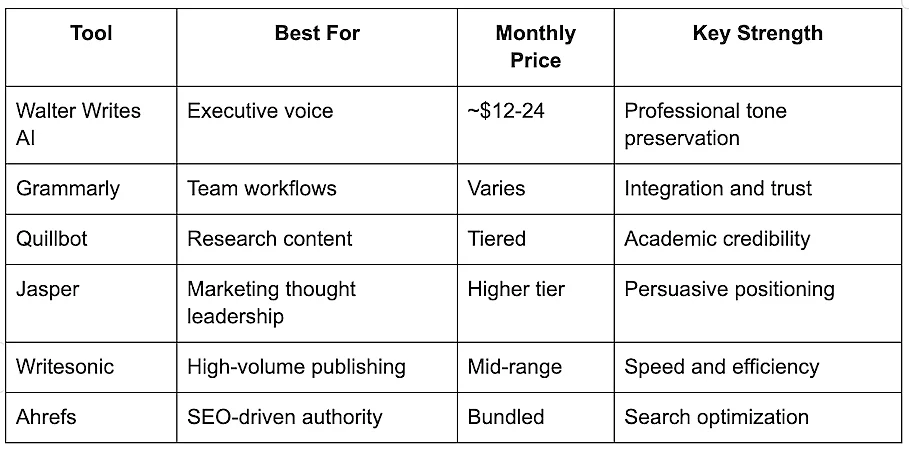
Pricing for Walter Writes is easy to understand and straightforward. The Free Tier provides 300 words for testing the engine; the Starter Plan costs approximately $12 per month for 30,000 words (a good fit for most individual thought leaders publishing weekly); and the Business Plan ($24) provides support for 70,000 words and is geared toward agency-level production of content.
A single verified case study shows a consultant who produced 50 LinkedIn articles per month. After utilizing Walter Writes to humanize content, his engagement remained steady even after the 2025 Google algorithm updates that were created to target and penalize AI-based content; he did not see a decline in rankings, and his credibility did not suffer.
This tool supports 80+ languages and offers multiple tone options, but the Professional and Academic modes are where it really shines for authoritative content. You paste in your AI draft, select your tone, and get back something that reads like you spent hours refining it manually.
2. Grammarly AI Humanizer—Best for Integrated Workflow
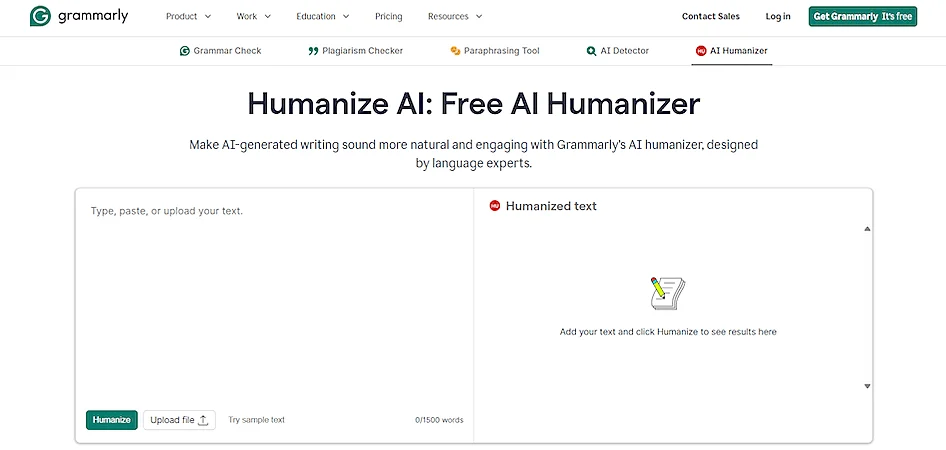 Best AI humanizers for thought leadership content - Grammarly
Grammarly built in their humanizer as an add-on to their current editing service. This allows users who currently use Grammarly’s writing/grammar editor to continue to write/edit/humanize with no additional software changes required.
One of the benefits of Grammarly’s humanizer is the established brand name recognition that is present today (many have used Grammarly for years). In addition to the brand recognition, the approval process in many organizations will be easier due to this name recognition; Grammarly also provides a way to keep the content readable and clear while humanizing it.
There are times when there is too much emphasis placed on being aggressive when humanizing content. Therefore, Grammarly’s humanizer maintains readability above all else, so the user does not end up with overly complicated content.
One of the downfalls of Grammarly’s humanizer is the ability to preserve the "voice" of the author. Grammarly’s humanizer focuses on providing accurate grammar and a high level of readability, at times smoothing out some of the intended "roughness" or "personality" that makes thought leaders compelling. Grammarly is dependable, but it is safe.
Grammarly’s pricing depends on whether the user is using the free version, Premium, or Business version. The humanizer is usually included in one of the higher-priced versions rather than being sold as an individual product.
3. Quillbot Humanizer—Best for Academic Crossover Content
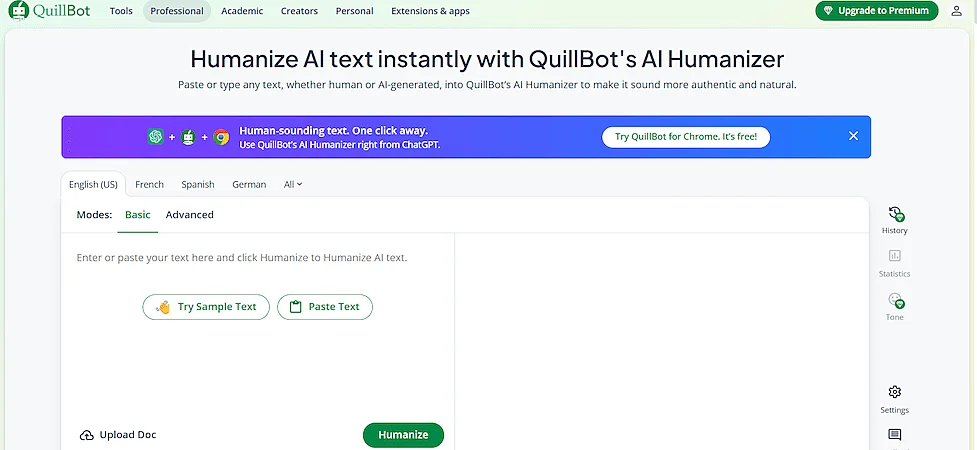 Best AI humanizers for thought leadership content - Quillbot
A major advantage of Quillbot is that it has developed a reputation within academia, and that reputation provides an advantage. If your thought leadership involves research, data analysis, or explanation of technical information, Quillbot will perform that level of complexity significantly better than most alternatives. Such comparisons help writers understand differences between AI humanizers and detectors and decide which tool like Quillbot vs GPTZero is more reliable for their content strategy.
In addition to understanding complex structures, Quillbot also understands how to preserve those complex structures and add just enough variation to fool detectors. In particular, Quillbot is great with technical terms, citations, and the types of lengthy explanatory writing used by executives when they are describing models or methods.
A potential disadvantage of using Quillbot is that it may be overly formal for platforms such as LinkedIn or Twitter, which provide thought leaders with opportunities to establish a more casual authority. Quillbot excels with whitepapers, research summaries, or industry reports; however, it does not work well for the type of personal narratives that create engagement on social media platforms.
Quillbot includes both artificial intelligence detection features and humanization features. Pricing for Quillbot is tiered based on word count and/or the number of features you have access to. The free version of Quillbot is limited and will only allow you to experience what Quillbot can do. If you want to seriously utilize Quillbot, then you need one of the paid versions.
4. Jasper AI Paraphrasing Tool—Best for Marketing-Focused Thought Leadership
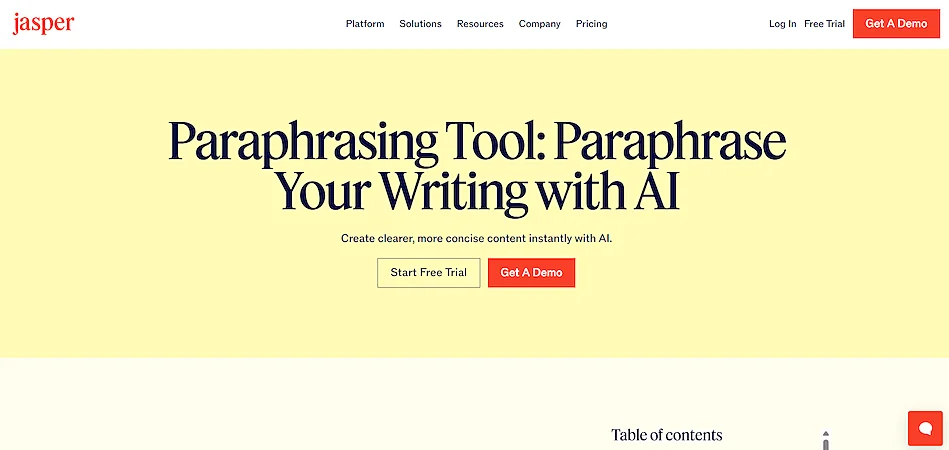 Best AI humanizers for thought leadership content - Jasper AI Paraphrasing Tool
Jasper uses a content-marketing approach to humanize text since it is primarily a content creation company. That said, the paraphrasing tool is intended to create humanized content that is both persuasive and engaging (not simply undetectable).
For teams creating thought leadership strategies focused on lead gen, sales positioning, and/or branding, Jasper’s tone options are consistent with these goals. Jasper does an excellent job of providing a confident and forward-thinking tone when used in promotional contexts while avoiding overtly promotional language.
However, Jasper is less well-suited for purely intellectual authority or academic-style content. Jasper has created its product to convert, and this conversion mentality is reflected in the way Jasper reorganizes sentence structure. This would be ideal for consultants trying to sell services, but may feel too pushy for researchers trying to establish credibility.
Jasper pricing tends to be more expensive than stand-alone humanizers because you’re purchasing into Jasper’s complete content creation ecosystem. Teams using Jasper for other types of content will appreciate the convenience of utilizing all tools within one platform.
5. Writesonic AI Humanizer—Best for Speed and Volume
 Best AI humanizers for thought leadership - Writesonic
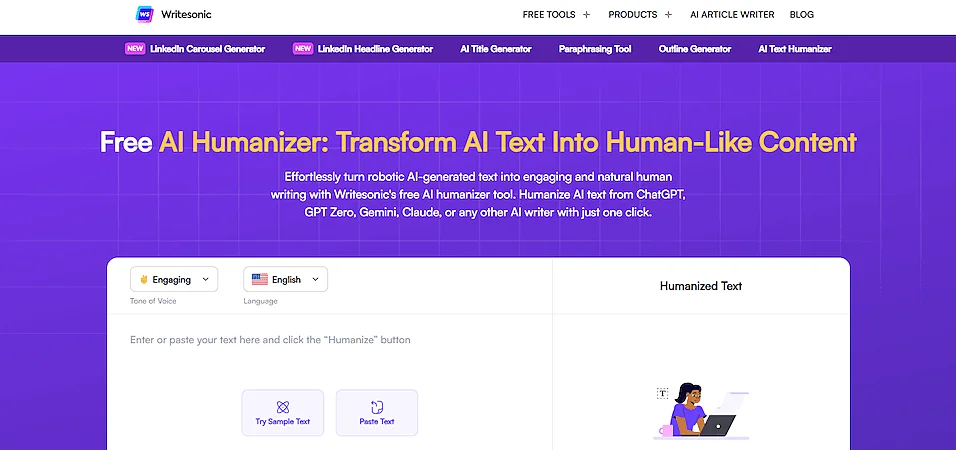
Writesonic is about speed. If you are posting every day or running numerous simultaneous thought leadership platforms, speed is important. The Writesonic humanizer has the ability to process your content very fast and does not have the lag some more complex tools do.
This platform works best for creating good-enough humanized content at scale. It may not provide the level of voice preservation as Walter Writes, but it can take obvious AI-generated content and make it palatable in seconds. For executives who do not care about distinct voice and care about consistency across all of their platforms, that is a reasonable trade-off.
Writesonic also provides an entire content generation suite, allowing you to create and humanize within the same user experience. This allows the workflow to be streamlined and reduces the friction that oftentimes causes inconsistency in content.
6. Humaniser AI Humanizer—Best for Fast, Reliable AI Content Humanizing
Our AI humanizer was built around one core priority: getting AI-generated text past detection tools instantly, at scale, without friction. It's optimized for speed and reliability rather than a specific content niche, which is why I'd say it's a strong fit for anyone — students, marketers, writers, or business teams — who need fast, dependable results across large volumes of content rather than a slow, strategy-heavy workflow.
Humaniser understands how to break the repetitive sentence patterns and predictable phrasing that detectors flag, reworking tone and rhythm so the output reads the way a person would naturally write, not just a reshuffled version of the AI draft.
A notable strength of Humaniser is that it works directly with output from ChatGPT, Gemini, and Claude, and doesn't require signup to start — so there's no onboarding friction before you can test it. Its bypass rate sits at 99.8% against detectors like GPTZero and Turnitin, which is a meaningful edge for anyone whose work depends on consistently clearing those checks.
Humaniser's pricing model keeps things accessible: the free plan covers English only, while paid plans unlock 50+ languages, making it scalable whether you're humanizing occasional content or processing high volumes as part of a regular content pipeline.
7. Ahrefs AI Humanizer—Best for SEO-Conscious Thought Leaders
 Best AI humanizers for thought leadership content - Ahrefs
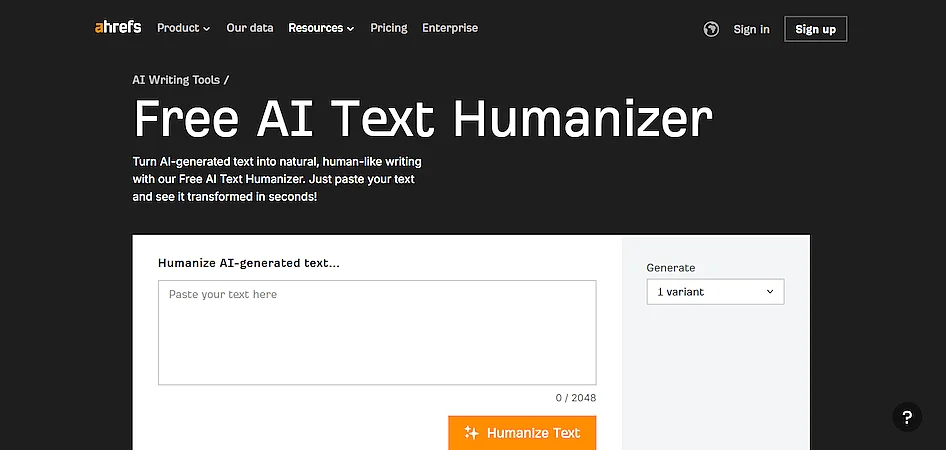
Ahrefs’ Humanizer was developed to be based on search visibility in order to maximize the effectiveness of an organic discovery based on Thought Leadership strategies. It’s also optimized for simultaneous detection avoidance as well as for search engine preference, which is why I believe this makes it a good fit for blog-based thought leadership or content marketing programs where Google rankings are important to establish authority.
Ahrefs understands how to keep keywords relevant and how to add enough semantic depth to the content to make it seem like it was created by a human, but they will need to provide enough variation to create the same type of feeling in the reader as you would get from reading something created by a human.
A major limitation of Ahrefs’ Humanizer is that it is currently only applicable to written content that exists on websites, rather than being on social media (i.e., LinkedIn or Twitter), and therefore, the Search Engine Optimization (SEO) optimization that is provided does not have the same level of importance as Voice and Engagement do when creating Thought Leadership on those platforms.
Ahrefs’ pricing model generally bundles all of its tools together; the Humanizer is a part of its overall writing tools suite, and therefore is not a standalone product.
Quick Comparison
 Best AI humaniezer for thought leadership content - comparison
How to Choose the Right Tool
Identify where your thought leadership is located. If you are using LinkedIn as your primary platform for conversation authority, then it needs to be something that preserves conversational authority. Academic credibility is key if you write extensive research pieces. Lead generation with a blog requires that you focus on search engine optimization (SEO).
Use each free version with the actual content you have created and not generic examples. Copy and paste a post you've already written that reflects your own voice into each tool.
Which tool has preserved what made your unique perspective so distinctive? Some humanizers will strip away your personality in order to get through high detection rates. Conversely, some humanizers will maintain your style but may fall short of passing detector tests.
If you create content every day, then your time to create and your word count limitations are very important. If you create one large content piece per month, then you can use more advanced tools with slower processing times and more complex algorithms.
Red Flags to Watch For
Be wary of tools that oversimplify your ideas. Good humanization maintains complexity while varying structure. If your nuanced argument becomes a series of obvious statements, the tool is dumbing down your content to make it easier to rewrite.
Watch for generic corporate language. Phrases like "leverage synergies" or "drive value" are AI tells even after humanization. Strong tools replace these with more specific language, not just shuffle them around.
Check whether the tool strips out your personal style markers. The phrases you use consistently, the way you structure arguments, the examples you favor—these create your distinctive voice. Humanizers that erase these in pursuit of "naturalness" are making your content less distinctively yours.