Customer support has quietly gone through one of the biggest transformations in the modern workplace.
What used to sit in one office, tied to a single location, now stretches across continents, and cultures.
The shift picked up serious speed after COVID, when remote work moved from a temporary fix to a long-term strategy.
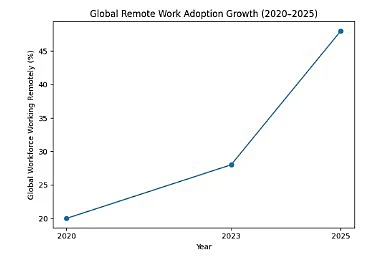
With nearly 48% of the global workforce working remotely in some form, distributed teams are becoming the norm.
And support teams? They felt it more than most.
Today, helping customers means being available around the clock, scaling fast, and speaking to a global audience.
That reality pushes companies into a key decision: build a local, in-house team, or go fully remote with a distributed workforce.
In this article, we’ll break down what that choice actually means in practice, far beyond the usual surface-level pros and cons.
P.S. If you’re looking to level up your support team, don’t miss our Tips to Improve Your Customer Support guide. It’s packed with smart, actionable insights.
What "Remote Hiring" and "Local Hiring" Actually Mean in Customer Support
For starters, we need to get clear on what these models actually look like in real life.
Remote hiring
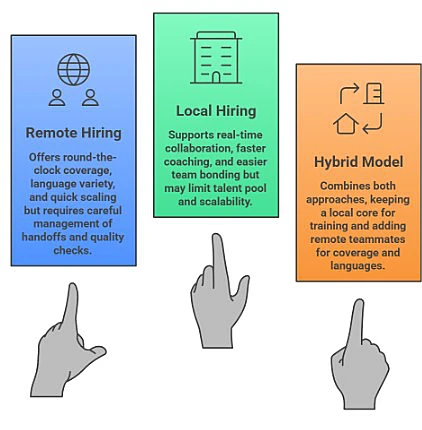
Remote hiring means building a support team that works from different cities, countries, plus time zones.
Agents log in from home or shared spaces, often in places where talent pools run deep.
This setup shines for round the clock coverage, language variety, and quick scaling during spikes.
It also brings extra moving parts like handoffs between shifts, clearer documentation, and tighter quality checks so every reply feels consistent.
In practice, many teams see performance gains too.
For example, remote customer service agents handle roughly <a href="https://wifitalents.com/remote-and-hybrid-work-in-the-customer-service-industry-statistics" target="_blank" rel="dofollow"**>**13.5% more calls daily than their office-based counterparts.
Local hiring
By contrast, local hiring usually refers to recruiting people in your office city or within the same region.
Sometimes it includes an in office setup, sometimes a regional remote setup, yet the key point stays the same: shared time zone and cultural context.
This model supports real time collaboration, faster coaching, plus easier team bonding - areas where distributed teams often struggle.
Currently, only 21% of employees say their organization has built a strong remote culture.
Hybrid models
Hybrid blends both approaches. You keep a core local group for training, escalations, and brand voice, then add remote teammates for coverage, languages, or seasonal volume.
So how do these models actually differ when it comes to budget and spending?
Let’s explore.
Cost Structure: The Biggest Driver of the Decision
Remote hiring often looks lighter on paper.
Salaries can be lower depending on the market, and companies save on office rent, equipment, utilities, and day-to-day overhead.
In some cases, the difference is huge.
Notably, companies can reduce hiring costs by up to 50-70% with remote teams.
A support hire that costs $4,000 per month locally might cost $1,500 to $2,500 remotely, which creates major savings across a full team.
Still, visible costs are only one part of the picture.
Remote teams often need stronger onboarding systems, better documentation, extra management layers, paid collaboration tools, and careful legal or compliance support across regions.
And those expenses add up fast when the operation scales.
On the other hand, local hiring usually brings higher payroll and infrastructure costs, yet it can reduce friction in training, communication, and supervision.
So yes, money talks first, but the smartest decision usually comes from looking at the full operating cost, rather than salary alone.
After cost, the conversation naturally shifts to talent and hiring timelines.
Talent Pool & Hiring Speed
As you already see, remote hiring changes the game when it comes to access and speed.
With a global talent pool, companies can find agents who speak specific languages, understand regional customers, and cover different time zones without stretching one team too thin.
That makes scaling support much more rapid, especially during peak growth or expansion into new markets.
In fact, remote hiring expands candidate pools by 340%, shortens time-to-hire by 16%, and boosts offer acceptance rates by 13%.
By comparison, local hiring offers a smaller pool shaped by geography, yet it can bring stronger market familiarity and closer cultural alignment.
Therefore, while remote teams often move faster, local teams may feel like a more natural fit for certain brands and customer expectations.
But finding the right people is one thing, working together effectively is another.
And that leads us to the next section.
Communication & Collaboration in Support Teams
This is where the real operational differences become visible.
With a local team, quick collaboration happens naturally.
A tricky ticket comes in, the agent taps a teammate, a lead jumps in, and the escalation gets handled in real time.
That speed often shows up as faster resolution and fewer handoffs, especially when the product or policy questions get messy.
Remote teams can operate just as effectively, but the approach looks different.
Communication often runs async, with heavy reliance on chat, ticket notes, and a solid knowledge base.
When an urgent escalation hits, the handoff might pass through time zones or queues, which can add minutes or hours if the process lacks structure.
This difference in speed matters, especially when 90% of customers consider a fast response essential when they have a support question.
Tone can also get misread in text, which affects empathy and clarity.
So the real question becomes less about location and more about operational discipline.
And all of that internal coordination eventually shows up in the customer experience:
Customer Experience Impact
All that behind-the-scenes coordination eventually lands in one place: the moment a customer hits "send."
Remote setups can turn time into an advantage.
While one region logs off, another picks up, which keeps response times tight and conversations moving.
Add native speakers into the mix, and interactions start to feel more personal, often lifting CSAT (Customer Satisfaction) in subtle but powerful ways.
It’s not just a nice-to-have either: nearly half of customers would switch brands entirely just to get support in their own language.
In parallel, distributed teams live or die by consistency.
Without strong guidelines, two agents might solve the same issue in completely different ways, which affects trust and resolution quality.
Local teams tend to feel more unified in tone and decision-making. This shows up as smoother, more predictable experiences.
In the end, customers feel the structure behind the team, even if they never see it.
Once the external impact is clear, it makes sense to look at the internal energy of the team.
Team Culture & Engagement
Zoom out a bit, and a different pattern starts to show up over time: how teams stay engaged, learn, and actually grow together.
In a local setup, energy builds almost by default.
New hires absorb tone, shortcuts, and product nuances just by being around others.
A quick question turns into a mini training moment, and over time that compounds into a stronger, more connected team.
Remote teams run on design, not proximity.
Onboarding has to guide people step by step, mentorship needs a clear rhythm, and knowledge lives in systems rather than casual conversations.
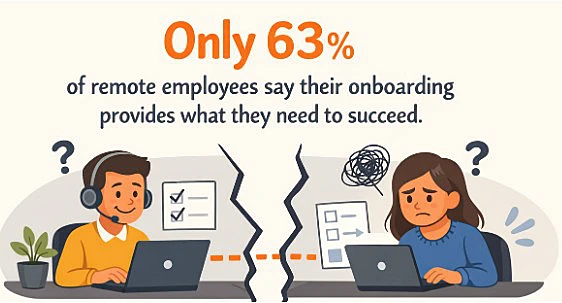
However, only 63% of remote employees say their onboarding provides what they need to succeed.
So culture here works like infrastructure. Invisible at first glance, yet it decides how well the whole system performs long term.
- When that structure feels sharp, teams stay aligned and confident.
- When it feels loose, people can lose context, which slowly affects quality and motivation.
Pro tip: Companies that succeed with remote hiring often rely on strong employee engagement consulting to keep distributed teams connected and motivated.
From team dynamics, the focus naturally shifts to how everything is managed.
Operational Complexity & Management
A remote support team looks elegant on a hiring slide. Effectively, it runs like a small international operation.
Contracts differ by country, payroll cycles vary, public holidays never align, and someone always starts their shift when someone else ends it.
Add performance tracking, quality reviews, security access, and product updates across time zones, and management turns into a coordination sport.
That may explain why only 30% of employees feel their managers are truly equipped to lead in remote or hybrid environments.
Local teams feel more contained.
Fewer legal variables, fewer moving parts, quicker approvals.
A policy change travels across the room instead of across continents.
The catch?
Remote setups reward leaders who think in systems.
Clear playbooks, layered team leads, tight QA loops, and strong tooling become the backbone.
Without that structure, complexity creeps in quietly and spreads faster than most founders expect.
After complexity comes the real growth test: scalability.
Scalability & Flexibility
Imagine a startup that just launched in three new markets - tickets double in a month.
With a remote setup, adding five agents across different regions can happen in weeks, sometimes days.
Coverage expands, new languages come online, and support hours stretch without moving a single wall.
Moreover, distributed teams often operate more efficiently too, with remote agents handling around 25% more requests per shift on average.
The team flexes with demand.
Now picture the same spike inside a fully local structure.
Hiring cycles stretch longer, office capacity becomes a factor, and expansion follows a more linear path.
That pace can feel safer, yet it limits how quickly support evolves alongside product growth.
For fast-moving companies, remote hiring acts like an accelerator, while local hiring feels more like controlled steering.
Both move forward, yet the speed and elasticity look very different.
Now let’s pull the threads together and see what makes sense for your support setup.
Choosing the Right Hiring Model for Your Support Team
The best hiring model for a support team depends on what kind of pressure the business is dealing with every day: rapid growth, complex customer needs, tighter budgets, or higher service expectations.
When Remote Hiring Makes More Sense
Remote hiring creates a real edge when support needs to move fast and stretch wide.
- You need 24/7 coverage without burning out one team
- You serve customers across multiple regions or languages
- Your company is growing and ticket volume changes month to month
- You want to expand support capacity without expanding office footprint at the same speed
For startups and high-growth brands, this model can turn support into a growth enabler. New markets open faster, queues stay healthier, and hiring keeps pace with momentum.
When Local Hiring Is the Better Choice
Local hiring makes stronger sense when support depends on depth, nuance, and close internal alignment.
- Your product is complex and agents need constant context from product, sales, or engineering
- Your customers expect a high-touch experience with strong brand fluency
- Your team handles sensitive accounts, enterprise issues, or layered escalations
- You value tighter coaching loops and faster internal decision-making
In these cases, proximity can sharpen quality. Support feels more connected to the business, which often leads to stronger judgment in difficult conversations.
The Hybrid Model: A Practical Middle Ground
For many companies, hybrid ends up being the most realistic answer.
- Keep a local core team for training, escalations, and brand voice
- Add remote agents for first-line support, multliingual coverage, or overflow volume
- Use regional hubs to support key markets without centralizing everything in one place
A common setup looks simple: Tier 1 remote, Tier 2 local. That structure gives teams room to scale while keeping expertise close to the center.
So, What Actually Wins in the End?
At this point, the answer feels less like a choice between two models and more like a reflection of your business priorities.
- If budget pressure is high, remote setups open breathing room.
- If customer expectations lean toward speed and availability, distributed teams extend coverage naturally.
When product complexity increases, local teams often bring sharper judgment and tighter alignment.
And during fast growth phases, flexibility becomes the deciding factor, since support has to keep up without slowing everything else down.
So the real takeaway sits here: your hiring model shapes how your customers experience your brand every single day.
Response speed, clarity, consistency, all of it ties back to how your team is built.
Pick the model that supports the experience you want to deliver, because in the end, support structure is customer experience strategy.