Why would anyone care for a product if the company isn’t even promoting it? Businesses need to market their products to increase awareness, drive demand, and bring in potential customers.
Product promotion goes a long way. The issue is choosing the best strategy to promote your product. This can be challenging given the number of strategies. Plus, not every product is the same, nor is every audience, so not every strategy is helpful.
In this article, we discuss product promotion and the strategies businesses can use to promote their products, with clear examples. We will dive into 10 ways to promote a product.
What is Product Promotion?
Overall, product promotion is the process of promoting a specific product to generate interest and drive purchases. If you’ve ever seen an online ad or commercial, then you’ve seen a product promotion.
Advertisers and companies use product promotion to create product awareness. Additionally, product promotion is used to increase customer loyalty and brand recognition.
Why is Product Promotion Important in Marketing?
Product promotion, or really promotion in general, is one of the four Ps of the "marketing mix" model (Product, Price, Place, and Promotion) and is incredibly important.
When you’re trying to market a product, you have to promote it. This can be done by taking explicit photos and videos that demonstrate its usefulness, highlighting positive reviews, or leveraging celebrities/influencers.
Just because you promote a product, though, doesn’t mean everyone is going to buy it. Promoting a product also increases brand awareness by marketing the brand. While you might not own a pair of Nike shoes, you definitely know the brand.
10 Ways to Promote a Product
Now that we have a better understanding of product promotion, we can dive into the many ways to promote a product. Below are 10 strategies to advertise your products.
1. Defining the Target Audience
Regardless of how you choose to promote a product, it is essential to define the target audience. Who is going to use your product? Is there a specific age group the product is used mostly by?
Age is just a small factor. You should also consider who the product is for in terms of working professionals and general needs. For instance, if your product is an app for accountants, you’ll need to emphasize that the product is for accountants. The wording you’ll use for an app for accountants vs. hairstylists is very different.
The same applies to industries such as law. Now all law firms are the same. The Baumgartner Law Firm, for example, focuses on car accident cases in Houston. When creating promotional content for this law firm, emphasize the location (Houston) and the types of cases (car accidents).
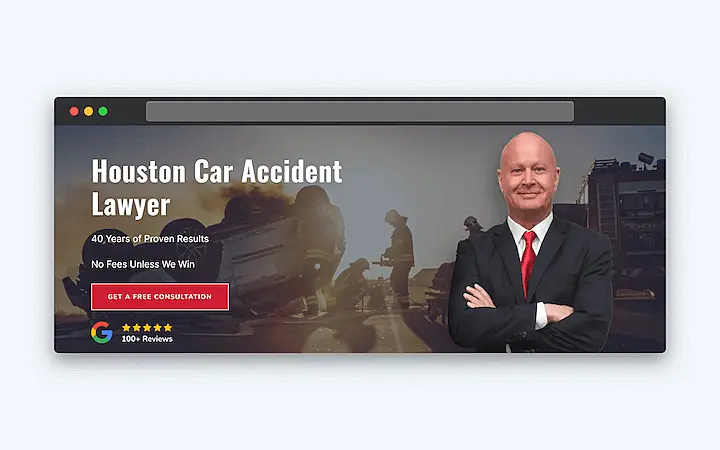 What is Product Promotion & 10 Strategies to Promote Your Products - defining the target audience
2. Encourage and Highlight Reviews
Before many people purchase a product or service, they vet it by reading reviews. Money doesn’t grow on trees, so it’s important that a product has excellent reviews.
While you can’t control how people will review your product, you can highlight the best reviews by snipping and posting them on your company’s website, social media accounts, and emails.
An example of this is Alpert Schreyer Injury Accident Lawyers. Clearly, on their website are raving client testimonials. They are listed on the home page and easy to see with a large font labeling them as ‘Client Testimonials.’
 What is Product Promotion & 10 Strategies to Promote Your Products - encourage and highlight reviews
3. Utilize Celebrities and Influencers
Social media is a powerful tool, which is likely why so many users trust celebrities' and influencers’ opinions on products. To elevate your social media presence and your products' global reach, you can utilize influencers and celebrities.
According to the Digital Marketing Institute, about 69% of consumers trust influencer recommendations. That is almost 7 out of 10 people.
Businesses don’t have to pay top dollar for the biggest influencers for this to work either. Microinfluencers, and even those with less than 10,000 followers, can make a difference. They are more relatable and niche. While their followings may not be as large as those of celebrities like Taylor Swift, microinfluencers are often seen as more trustworthy.
4. Offer Discounts and Loyalty Points
One of the best ways to promote a product and keep consumers coming back is to offer frequent deals and discounts, along with exclusive loyalty points. Who isn’t looking for a bargain? This is especially effective for new products, as it helps you gain repeat customers.
When offering discounts, regardless of where the marketing is published (email, print, or social media), it’s important to highlight the number. Use larger text to emphasize the discount. Discounts can get consumers to purchase a product, but loyalty points and memberships keep them coming back.
Loyalty points can be earned through an app or a physical stamp card. This is a good way to build client relationships and keep your brand top of mind.
This is common in food businesses like smoothie and coffee shops. After each drink purchase, the consumer receives a number of points or a stamp on a physical card. When they reach a certain number of points or stamps (typically 10), the consumer gets a free item.
5. Implement Contests and Giveaways
Utilizing contests and giveaways is a product promotion strategy closely linked with offering discounts to build client relationships. Not many people can resist entering a free content or giveaway.
If you’re looking to boost engagement and purchases, create and promote a contest. You can do this in a physical location through purchases or even on social media.
On Facebook and Instagram, many companies run contests where a lucky winner (or five) is chosen if they like, share, and tag someone on the post.
Giveaways don’t have to be complicated either. You can keep it simple by starting giveaways when you’re looking to grow your social media or hit a specific number of people in your store. For physical stores, businesses can promote their product by giving a free prize for the 100th purchase.
6. Provide Clear Information
Attention spans are not what they used to be. A strategy to promote your product or service while keeping people engaged is to provide clear information about your services. If a potential customer has to further research or call for information on what a service provides, they might go to someone else.
So, what does providing clear information look like? It varies from business to business. On WGK’s website page, they list their firm's history, multiple ways to contact them, and common cases alongside a blog full of helpful advice that their clients would find relevant.
The website is easy to navigate and understand, guiding users to a free consultation and additional information.
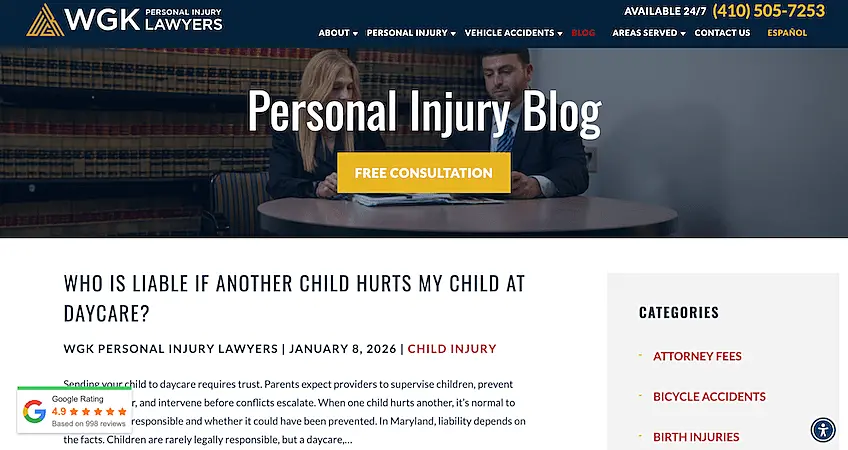 What Is Product Marketing & 10 Strategies to Promote Your Products - provide clear information
7. Use AI
AI is all the rage now, especially as it gets better and better. Instead of leaving all the marketing work to pile up, use AI assistance to free up time.
There are so many ways to use AI to market your product. Just a few ways you can use this neat software are by generating smooth social media captions that hit all your target words, editing blog posts, and answering general questions a consumer might have.
One AI-powered product is Jivochat, a useful tool for product promotion. Jivochat is an all-in-one customer service solution that offers automated chat across multiple channels, including WhatsApp, Instagram, Facebook, and Apple Business Chat. This service also offers live chat options to suit your business needs. Unsure if this is the right choice for your business? Jivochat offers a 14-day free trial with no strings attached.
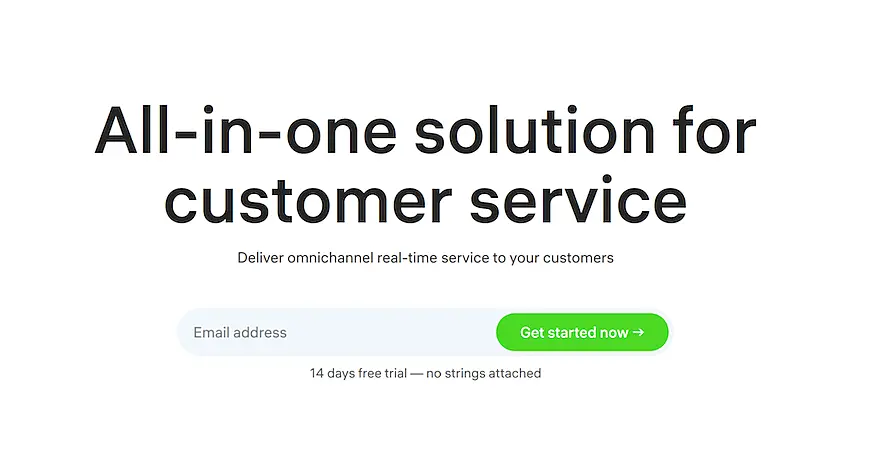 What is Product Marketing & 10 Strategies to Promote Your Products - use AI
8. Offer Free Samples and Consultations
Sometimes, even the cleanest website and the best reviews won’t satisfy a potential customer. A free sample, consultation, or trial, though, may sway their minds.
This will depend on your product or service. For beauty companies, it would make more sense to hand out free samples at in-person events. There is also the option to accept online sample requests to expand reach.
But what about services? This can get a little tricky, but it is still doable. Law firms, for instance, can’t exactly hand out free samples of their service, but they can market free consultations.
One law firm that does this is Zehl & Associates in Houston. The law firm understands that building trust is essential to its practice. To do this, they offer a free case review clearly stated on their website.
9. Send Marketing Emails
Although social media is a powerhouse for marketing and product promotion, email shouldn’t be overlooked. There are still plenty of people who read their emails, sign up for newsletters and promotions, use discounts, and learn more.
This strategy can be combined with others on this list. For instance, in your email, you can offer discounts and loyalty points/memberships. You can also use AI to craft the email, saving you time and money. The most important part of an email, though, is to include a call to action.
At the end, and even in the subject line, write a call to action. This can be for clickers to purchase your product, share it with friends and family, or sign up for discounts.
10. Don’t Forget About Print
In this digital age, it’s easy to forget about print, but don’t. It’s a tool with its own value and strengths. When we say "print," we aren’t just referring to flyers and posters. Business cards, pamphlets, and billboards are examples of print marketing.
Combining social media, a good website, and print media can’t hurt, especially if you market your product through print. According to GraphicZoo, 44% of customers visit a brand’s website after receiving direct mail. A QR code is all it takes.